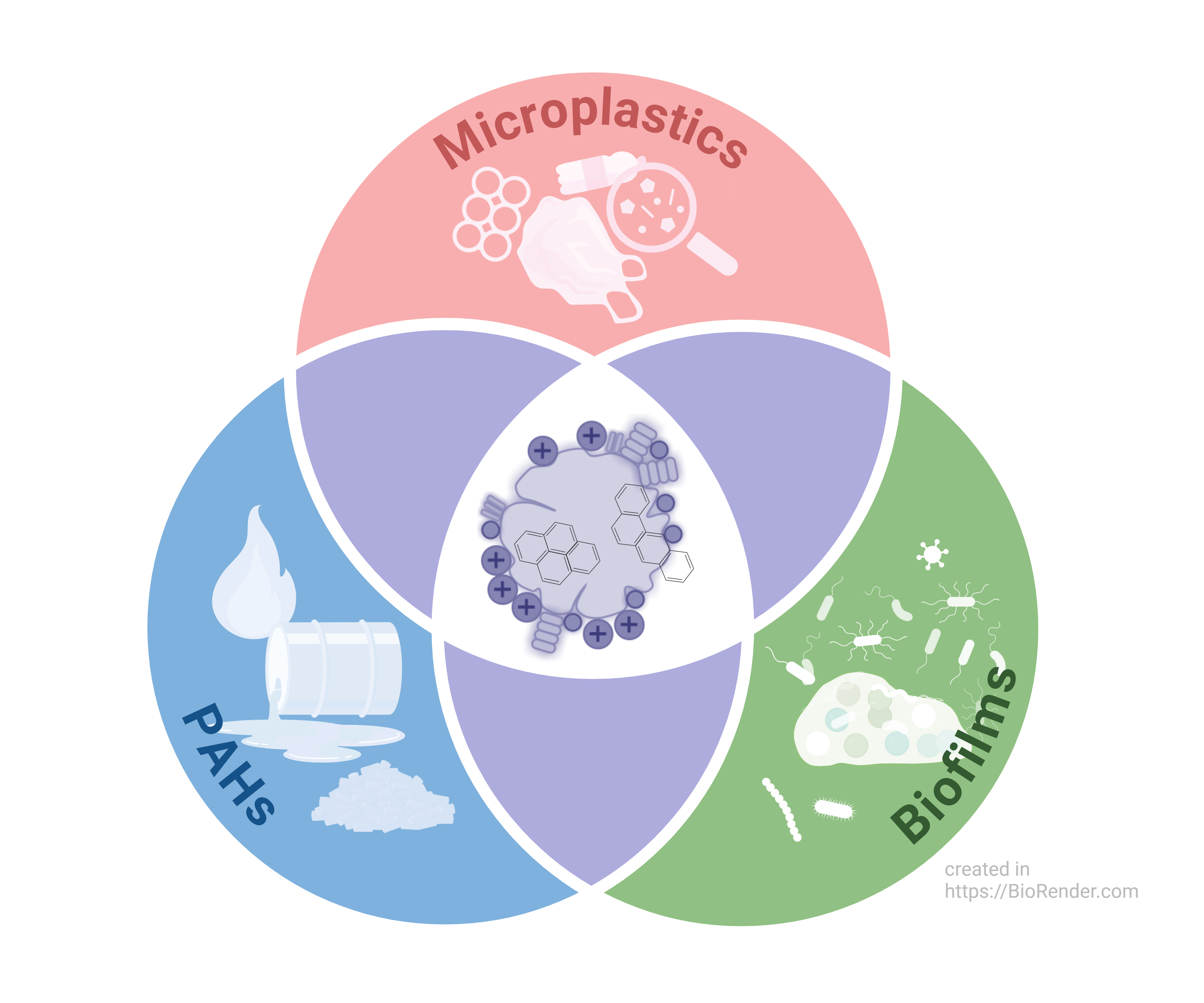

We address effects elicited by plastics and associated chemicals at different levels of biological organization, looking at environmental organisms as well as human cells.

Plastics leachates contain complex chemical mixtures capable of interacting with biological systems, posing potential risks. Risks might be exacerbated through environmental factors such as UV exposure, which promotes chemical transformations that can increase toxicity. These effects can be rapidly screened using high-throughput approaches such as in vitro cell-based bioassays, providing efficient mechanistic toxicity profiling across multiple endpoints. This work uses human cancer cell lines to assess leachate cytotoxicity. Results have shown that plastic leachates after UV exposure have more bioavailable and hazardous transformation products compared to the dark controls. The increased toxicity was primarily linked to the release and transformation of organic plastic-associated chemicals.
Aaron Beck
Eric Achterberg
Deedar Nabi
Projects:


One of the key questions we address is whether and how microplastic particles (< 5 mm, incl. biodegradable and bio-based polymers) and/or plastic leachates affect digestion, energy balance, and overall health of marine organisms, often interacting with environmental factors such as temperature. Our research focuses on range of invertebrates including crustaceans, gastropods and bivalves, which serve as model organisms representing different functional groups within marine food webs. We investigate both mechanical effects and sublethal physiological responses, including oxidative stress, metabolic alterations (e.g., assessed via metabolomics), and impaired immune function.
Gisela Lannig ORCiD
Reinhard Saborowski ORCiD
Research team:

We aimed to evaluate immunotoxic effects of microplastic P-leachates using our newly established battery of immunoassays for in vitro analysis in human cells. We found immunomodulatory effects exerted by PE and PET P-leachates generated by UV-irradiation. The observed effects of the microplastic compounds (e.g. PE-2, PET-2) were immunosuppressive for certain immune cell subtypes such as T, NK and MAIT cells as well as immunostimulatory (e.g. PET-2) effects for B cells. We have proven that particular plastic-associated chemicals may be detrimental for immune cell function.

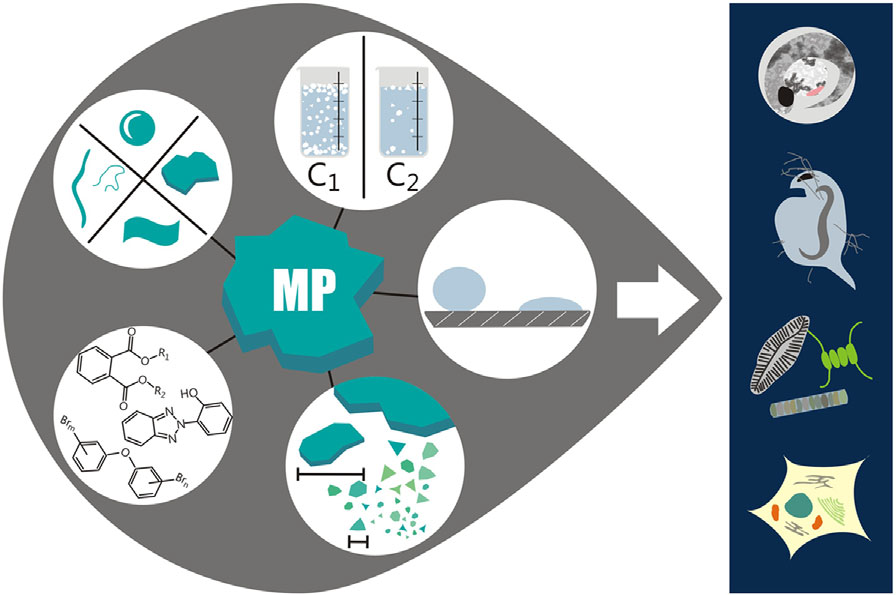
Our research work is focused on the aquatic ecotoxicity assessment of plastic pollutants (nano- and microplastic particles, and plastic-associated chemicals). The effects of these pollutants are assessed using several aquatic organisms, from autotrophs (e.g. green algae) to heterotrophs, from invertebrates (e.g. water flea) to vertebrates (e.g. zebrafish embryos), and from single organisms to communities (e.g. biofilm communities living attached to surfaces). The identification of plastics hazards also includes the characterisation of organism-particle interaction, e.g., by assessing attachment of particles to organisms, and internalisation and distribution of particles in environmental organisms.
Research team:
Mechthild Schmitt-Jansen / ORCiD
Mbuyiselwa Shadrack Moloi / ORCiD
Projects:



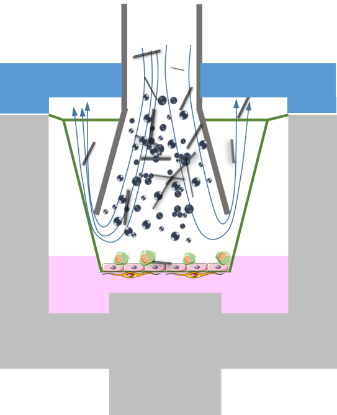
Airborne particles or fibers are investigated regarding their biological effects. Emissions from technical processes, such as the mechanical recycling of plastics, are also considered as well as environmental immissions. Human lung cell cultures are exposed towards potentially toxic aerosols at the air liquid interface to study the biological responses by multi-omics approaches and establish dose-response relationships. We aim to further improve 3D cell culture systems, organ on a chip and primary tissue models which more closely mimic human physiology. New technologies will be developed, i.e. suitable electrode arrays to monitor cellular function in real-time.
Sonja Mülhopt ORCiD
Carsten Weiss ORCiD
Research team:
Sonja Oberacker, Marco Mackert (ITC)
Susanne Fritsch-Decker, Dorit Mattern (IBCS-BIP)
Lea Riede (ITC, IBCS-BIP)
Projects:

By integrating metaproteomics and metabolomics, the project broadens its analytical perspective to investigate how plastic-associated chemicals affect the microbiome. Metaproteomics provides functional information on microbial communities, revealing their roles in degradation processes and shifts in activity, while metabolomics enables the detection of endogene metabolites and offers insight into metabolic pathways and system responses. In combination with experimental weathering scenarios and modelling approaches, this integrative strategy allows the tracking of degradation processes, the identification of molecular changes, and the characterization of how these substances partition across environmental compartments. The overall aim is to achieve a comprehensive understanding of how plastic-associated chemicals influence microbiome structure and function, as well as their environmental fate and biological impacts.
Ulrike Rolle-Kampczyk ORCiD
Nico Jehmlich ORCiD
Research team:

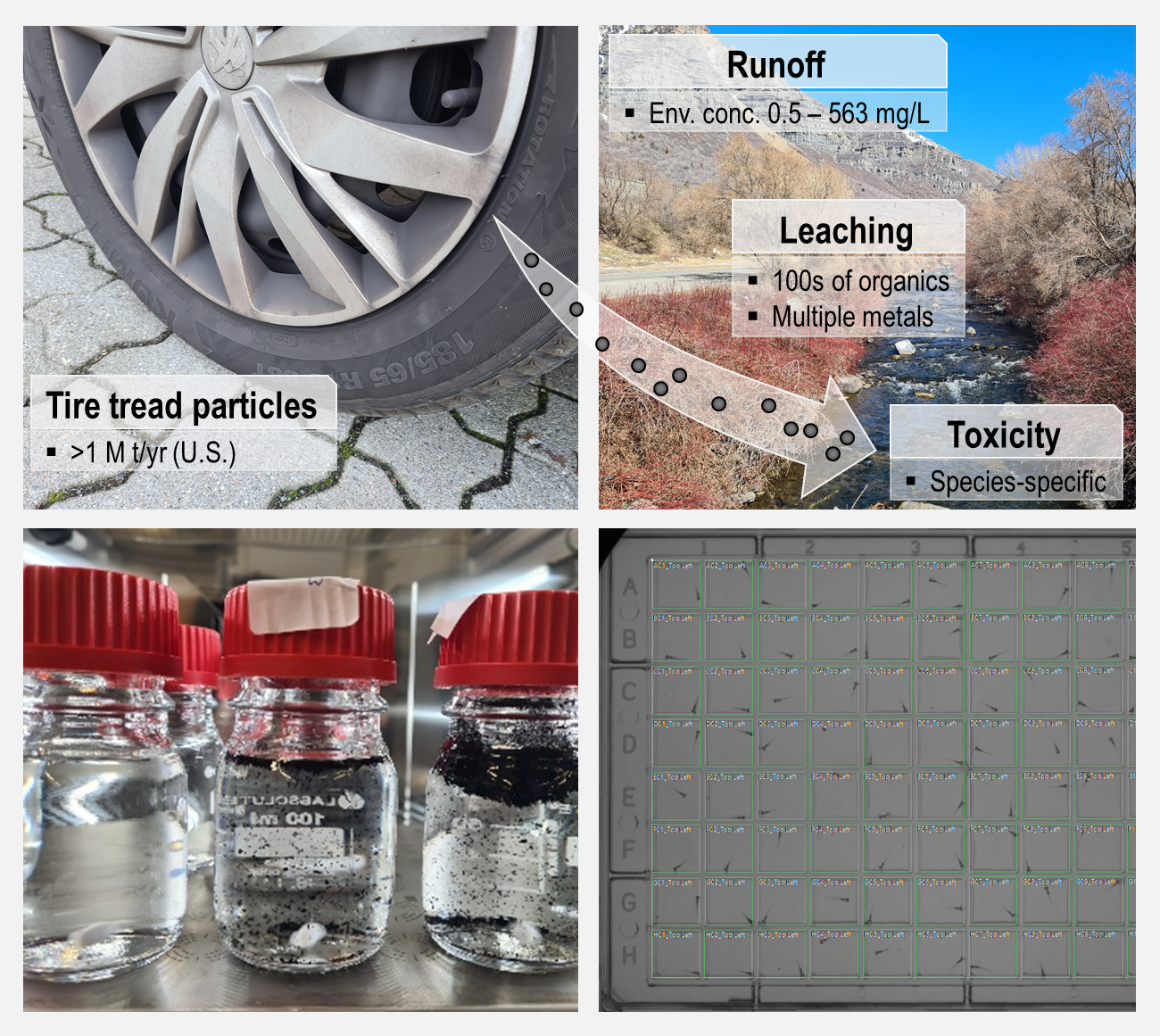
Our research explores how tire-associated chemicals and their mixtures affect nervous system function and behavior. Using zebrafish as a model, we combine multibehavioral phenotyping with chemical analytics to uncover how complex environmental mixtures alter sensorimotor function. A particular focus lies on identifying the chemical drivers and molecular pathways underlying neurotoxic effects of tire-derived pollutants. By linking behavioral responses with mechanistic toxicology, our work provides new insights into the environmental risks of microplastic- and tire wear-related contamination.
Research team:
Bettina Seiwert ORCiD


Microorganisms inhabit all possible niches of the Earth and play a central role in the healthy functioning of ecosystems. With the environmental accumulation of plastics, diverse microbial communities conquered even this human-made material as habitat. In our research group, we work at the interface between materials and the environment, focusing on the interactions between microorganisms, plastic surfaces, and associated chemicals. We investigate the plastic microbiome from strain to community level, applying high-throughput barcode, metagenome, transcriptome, and whole genome sequencing. One major goal is to unravel and utilize the enormous functional potential of the plastic colonizers, e.g., for pollutant degradation or the development of novel, sustainable materials. Exploring the plastic-associated microbiome broadens our understanding of the ecological impact of plastics and might support new strategies for tackling this pollution.