
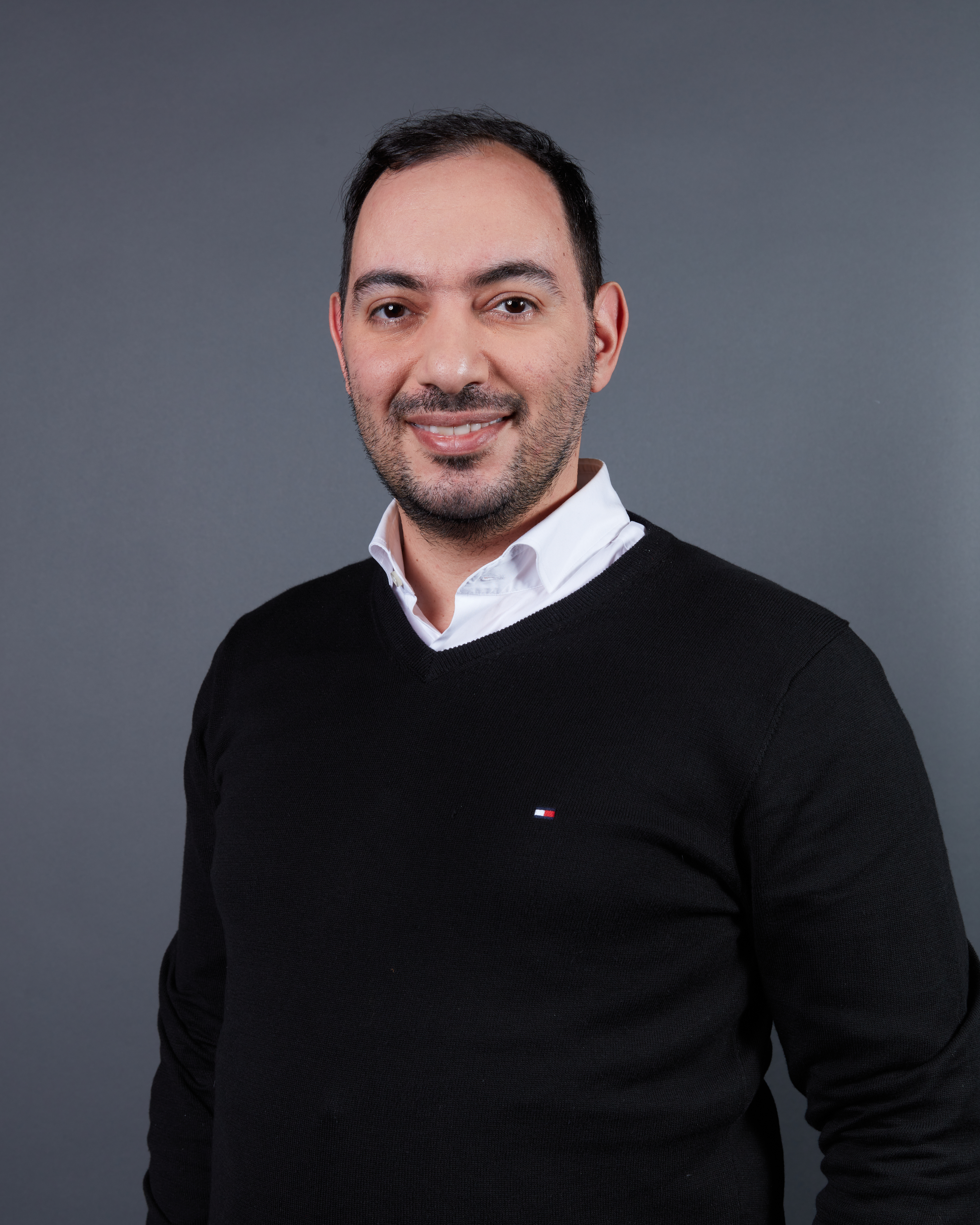
Dr. Husain Najafi
Research-to-operations · Open systems · Capacity development
Computational Hydrosystems (CHS)
Permoserstraße 15 | 04318 Leipzig
Hydrological Forecasting and Impact-Based Early Warning
I develop and manage flood and drought forecasting systems and translate them toward actionable, transferable early-warning applications. My work spans the forecasting chain—from hydro-meteorological prediction and forecast evaluation to inundation, exposure and impact information, automated workflows, and collaboration with operational agencies.A central focus is making these workflows scientifically robust, reproducible, and usable beyond the research environment.
International partnerships & capacity development
Building on high-resolution forecasting and early-warning research in Germany, I am extending this research-to-operations experience through international partnerships. The focus is on co-developing open and locally adaptable workflows, strengthening technical and institutional capacity, and supporting long-term local ownership rather than transferring a fixed system.
Systems developed in Germany
HS2S – Sub-seasonal Soil Moisture Forecast System (Experimental) Provides 1-km-resolution drought forecasting outlooks up to six weeks ahead, complementing the German Drought Monitor. Designed as an automated and transferable workflow.


FFS4DE – Experimental flood forecasting for Germany
Developed and tested for 1,500+ CAMELS-DE catchments, linking meteorological forecasts, hydrological modelling, automated workflows, and impact-based layers to support flood early-warning research and research-to-operations learning.

Open-source tools and knowledge transfer
A central goal of my work is to develop open, reusable forecasting workflows that can be adapted beyond a single institution or country. I focus on tools that support transparency, reproducibility, training, and long-term handover to partner institutions. This direction builds on lessons from high-resolution flood and drought forecasting in Germany and supports my current proposal and partnership development for African early-warning contexts.
Working with agencies and networks
I work at the interface between hydrological forecasting research, operational agencies, and international early-warning communities. My recent activities include invited exchange with German federal agencies, engagement with HEPEX and WMO-related drought and flood early-warning networks, and proposal development with partners for transferable early-warning workflows.
- Technical point of contact for ECMWF forecast products (since 2020).
- Focal point for DWD–SINFONY: forecast evaluation and operational data retrieval.
Supervision
- M.Sc student — Salar Sarvari Nouri: glacier module for mHM (ongoing).
- Postdoctoral researcher — Mehrdad Mohannazadeh (2023–25): radar- and observation-based product post-processing for hydrological modelling.
Open to collaboration
I am open to collaborations on flood and drought early-warning systems, impact-based forecasting, open-source forecasting workflows, and knowledge-transfer projects with research institutions, national hydrometeorological services, and international organizations.
Selected Publications
Impact-based flood early warning
Najafi et al., 2024 – Nature Communications High-resolution impact-based early warning system for riverine flooding. Nat Commun 15, 3726 (2024). https://doi.org/10.1038/s41467-024-48065-y
- This first-author paper has received substantial international attention, including more than 25,000 downloads, and a highlight by UNDRR PreventionWeb
Hydro-meteorological extremes and MOSES
Handwerker, J. H. et al. (2025). From initiation of convective storms to their impact — the Swabian MOSES 2023 campaign in southwestern Germany. Frontiers in Earth Science.
Santos, V. M., Casas-Prat, M., Poschlod, B., Ragno, E., Van Den Hurk, B., Hao, Z., Kalmár, T., Zhu, L., & Najafi, H. (2021). Statistical modelling and climate variability of compound surge and precipitation events in a managed water system: A case study in the Netherlands. Hydrology and Earth System Sciences, 25(6), 3595-3615. https://doi.org/10.5194/hess-25-3595-2021
Manuscripts under review
Mohannazadeh Bakhtiari, M., Modiri, E., Nguyen, V. D., Rakovec, O., Samaniego, L. E., and Najafi, H.
Closing the latency gap for operational flood forecasting: near-real-time 1-km hourly gridded forcing in Germany.
Hydrology and Earth System Sciences, under review.