
Research Focus:
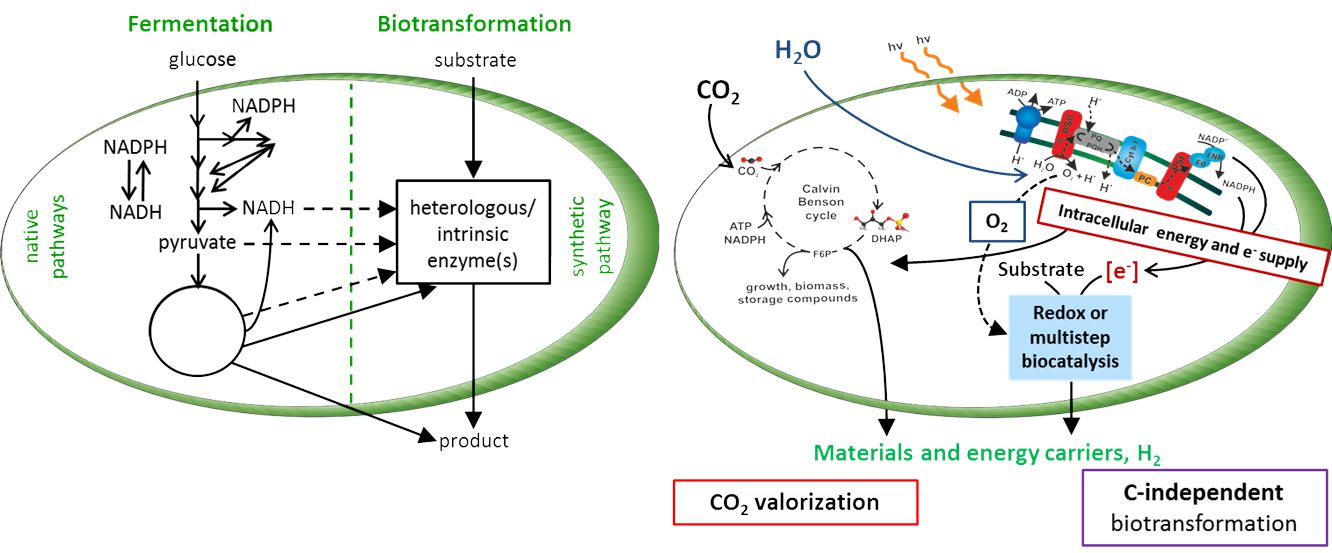
Research in the Applied Biocatalysis group focusses on whole-cell biocatalysis and aims at the development of efficient and stable bioprocesses via an integrated biocatalyst and reaction engineering approach. Specifically, redox biotransformations (oxygenases, dehydrogenases, hydrogenases), in vivo cascades / orthogonal pathways, and fermentative approaches are targeted via enzyme, metabolic, reaction, and process engineering to develop and apply engineered microbial cells for the eco-efficient production of bulk and fine chemicals as well as fuels and bioactives from renewable as well as fossil resources. The renewables considered include sunlight, water and CO2 and thus the exploitation of photosynthesis with H2 formation by means of O2-tolerant hydrogenases as a major focus. Cyanobacteria, E. coli, and Pseudomonads constitute the host strains mainly employed. Following a systems biotechnology approach, special emphasis lies on biocatalyst and process efficiency with the ultimate goal to develop environment-friendly and industrially feasible processes via rational biocatalyst and process engineering.
Group Leader:
Prof. Dr. Bruno Bühler
Academic Staff:
PhD-Students:
Bioprocess Engineer:
Guest Scientists:
Nina Antonia Siebert
Students / Hiwis:
Meera Dhaduk
Patricia Fiedler
Anne Gladis
Kashfia Jalil
Index:
You could use our publication index for further requests.
2026 (3)
- Janssen, K.N., Bolay, P., Tüllinghoff, A., Toepel, J., Spindler, D., Bühler, B., Lindberg, P. (2026):
Engineering cyanobacteria for high-yield photosynthetic isoprene production with long-term phenotypic stability
Plant Biotechnol. J. 24 (3), 1014 - 1030
10.1111/pbi.70395 - Till, J., López-Gálvez, J., Schattenberg, F., Schmidt, M., Müller, S., Toepel, J., Bühler, B. (2026):
Synechocystis sp. PCC 6803 shows high cell cycle dynamics reflected by an extraordinary genome copy number variation
Microb. Cell. Fact. 25 , art. 113
10.1186/s12934-026-02982-3 - Till, J., Schmidt, M., Toepel, J., Bühler, B. (2026):
Data set for "Synechocystis sp. PCC 6803 shows high cell cycle dynamics reflected by an extraordinary genome copy number variation" [Data set]
Zenodo
10.5281/zenodo.16778049
2025 (4)
- Bolay, P., Toepel, J., Bühler, B. (2025):
Biotechnological applications of cyanobacteria: Synechocystis and Synechococcus strains
In: Holtmann, D. (ed.)
Unconventional organisms in biotechnology
Adv. Biochem. Eng. Biotechnol. 192
Springer Nature, p. 155 - 191
10.1007/10_2025_282 - Lettau, E., Till, J., Toepel, J., Appel, J., Boehm, M., Sacco, D., Lorent, C., Teutloff, C., Mach, R.L., Gutekunst, K., Bühler, B., Lauterbach, L. (2025):
Engineering O2-tolerant chimeric hydrogenases optimized for ferredoxin coupling in Synechocystis sp. PCC 6803
ACS Synth. Biol. 14 (11), 4478 - 4495
10.1021/acssynbio.5c00494 - Lupacchini, S., Stauder, R., Opel, F., Klähn, S., Schmid, A., Bühler, B., Toepel, J. (2025):
Co-expression of auxiliary genes enhances the activity of a heterologous O2-tolerant hydrogenase in the cyanobacterium Synechocystis sp. PCC 6803
Biotechnol. Biofuels Bioprod. 18 , art. 41
10.1186/s13068-025-02634-5 - Till, J., Toepel, J., Sacco, D., Bühler, B., Appel, J., Gutekunst, K. (2025):
Dataset for "Engineering O2-tolerant chimeric hydrogenases optimized for ferredoxin coupling in Synechocystis sp. PCC 6803" [Data set]
Zenodo
10.5281/zenodo.15839120
2024 (5)
- Bertelmann, C., Bühler, B. (2024):
Hin zu effizienter biokatalytischer Oxyfunktionalisierung von Steroiden [Towards efficient biocatalytic oxyfuntionalization of steroids]
Biospektrum 30 (5), 593 - 595
10.1007/s12268-024-2261-3 - Bertelmann, C., Bühler, B. (2024):
Strategies found not to be suitable for stabilizing high steroid hydroxylation activities of CYP450 BM3-based whole-cell biocatalysts
PLOS One 19 (9), e0309965
10.1371/journal.pone.0309965 - Bertelmann, C., Mock, M., Schmid, A., Bühler, B. (2024):
Efficiency aspects of regioselective testosterone hydroxylation with highly active CYP450-based whole-cell biocatalysts
Microb. Biotechnol. 17 (1), e14378
10.1111/1751-7915.14378 - Höhmann, S.M., Briol, T.A., Ihle, N., Frick, O., Schmid, A., Bühler, B. (2024):
Glycolate as alternative carbon source for Escherichia coli
J. Biotechnol. 381 , 76 - 85
10.1016/j.jbiotec.2024.01.001 - Tüllinghoff, A., Toepel, J., Bühler, B. (2024):
Enlighting electron routes in oxyfunctionalizing Synechocystis sp. PCC 6803
ChemBioChem 25 (6), e202300475
10.1002/cbic.202300475
2023 (3)
- Toepel, J., Karande, R., Bühler, B., Bühler, K., Schmid, A. (2023):
Photosynthesis driven continuous hydrogen production by diazotrophic cyanobacteria in high cell density capillary photobiofilm reactors
Bioresour. Technol. 373 , art. 128703
10.1016/j.biortech.2023.128703 - Toepel, J., Karande, R., Klähn, S., Bühler, B. (2023):
Cyanobacteria as whole-cell factories: current status and future prospectives
Curr. Opin. Biotechnol. 80 , art. 102892
10.1016/j.copbio.2023.102892 - Tüllinghoff, A., Djaya-Mbissam, H., Toepel, J., Bühler, B. (2023):
Light‐driven redox biocatalysis on gram‐scale in Synechocystis sp. PCC 6803 via an in vivo cascade
Plant Biotechnol. J. 21 (10), 2074 - 2083
10.1111/pbi.14113
2022 (6)
- Bertelmann, C., Mock, M., Koch, R., Schmid, A., Bühler, B. (2022):
Hydrophobic outer membrane pores boost testosterone hydroxylation by cytochrome P450 BM3 containing cells
Front. Catal. 2 , art. 887458
10.3389/fctls.2022.887458 - Bretschneider, L., Heuschkel, I., Bühler, K., Karande, R., Bühler, B. (2022):
Rational orthologous pathway and biochemical process engineering for adipic acid production using Pseudomonas taiwanensis VLB120
Metab. Eng. 70 , 206 - 217
10.1016/j.ymben.2022.01.014 - Grund, M., Jakob, T., Toepel, J., Schmid, A., Wilhelm, C., Bühler, B. (2022):
Heterologous lactate synthesis in Synechocystis sp. strain PCC 6803 causes a growth condition-dependent carbon sink effect
Appl. Environ. Microb. 88 (8), e00063-22
10.1128/aem.00063-22 - Opel, F., Siebert, N.A., Klatt, S., Tüllinghoff, A., Hantke, J.G., Toepel, J., Bühler, B., Nürnberg, D.J., Klähn, S. (2022):
Generation of synthetic shuttle vectors enabling modular genetic engineering of cyanobacteria
ACS Synth. Biol. 11 (5), 1758 - 1771
10.1021/acssynbio.1c00605 - Theodosiou, E., Tüllinghoff, A., Toepel, J., Bühler, B. (2022):
Exploitation of hetero- and phototrophic metabolic modules for redox-intensive whole-cell biocatalysis
Front. Bioeng. Biotechnol. 10 , art. 855715
10.3389/fbioe.2022.855715 - Tüllinghoff, A., Uhl, M.B., Nintzel, F.E.H., Schmid, A., Bühler, B., Toepel, J. (2022):
Maximizing photosynthesis-driven Baeyer-Villiger oxidation efficiency in recombinant Synechocystis sp. PCC6803
Front. Catal. 1 , art. 780474
10.3389/fctls.2021.780474
2021 (6)
- Bretschneider, L., Heuschkel, I., Ahmed, A., Bühler, K., Karande, R., Bühler, B. (2021):
Characterization of different biocatalyst formats for BVMO‐catalyzed cyclohexanone oxidation
Biotechnol. Bioeng. 118 (7), 2719 - 2733
10.1002/bit.27791 - Bretschneider, L., Heuschkel, I., Wegner, M., Lindmeyer, M., Bühler, K., Karande, R., Bühler, B. (2021):
Conversion of cyclohexane to 6-hydroxyhexanoic acid using recombinant Pseudomonas taiwanensis in a stirred-tank bioreactor
Front. Catal. 1 , art. 683248
10.3389/fctls.2021.683248 - Bretschneider, L., Wegner, M., Bühler, K., Bühler, B., Karande, R. (2021):
One-pot synthesis of 6-aminohexanoic acid from cyclohexane using mixed-species cultures
Microb. Biotechnol. 14 (3), 1011 - 1025
10.1111/1751-7915.13744 - Bühler, K., Bühler, B., Klähn, S., Krömer, J.O., Dusny, C., Schmid, A. (2021):
Biocatalytic production of white hydrogen from water using cyanobacteria
In: Rögner, M. (ed.)
Photosynthesis: Biotechnological applications with microalgae
De Gruyter, Berlin ; Boston, p. 279 - 306
10.1515/9783110716979-011 - Bühler, K., Krömer, J.O., Klähn, S., Bühler, B., Dusny, C., Schmid, A. (2021):
Weißer Wasserstoff made in Leipzig [White hydrogen made in Leipzig]
Biospektrum 27 (3), 335
10.1007/s12268-021-1572-x - Lupacchini, S., Appel, J., Stauder, R., Bolay, P., Klähn, S., Lettau, E., Adrian, L., Lauterbach, L., Bühler, B., Schmid, A., Toepel, J. (2021):
Rewiring cyanobacterial photosynthesis by the implementation of an oxygen-tolerant hydrogenase
Metab. Eng. 68 , 199 - 209
10.1016/j.ymben.2021.10.006
2020 (5)
- Schäfer, L., Bühler, K., Karande, R., Bühler, B. (2020):
Rational engineering of a multi-step biocatalytic cascade for the conversion of cyclohexane to polycaprolactone monomers in Pseudomonas taiwanensis
Biotechnol. J. 15 (11), art. 2000091
10.1002/biot.202000091 - Schäfer, L., Karande, R., Bühler, B. (2020):
Maximizing biocatalytic cyclohexane hydroxylation by modulating cytochrome P450 monooxygenase expression in P. taiwanensis VLB120
Front. Bioeng. Biotechnol. 8 , art. 140
10.3389/fbioe.2020.00140 - Till, P., Toepel, J., Bühler, B., Mach, R.L., Mach-Aigner, A.R. (2020):
Regulatory systems for gene expression control in cyanobacteria
Appl. Microbiol. Biotechnol. 104 (5), 1977 - 1991
10.1007/s00253-019-10344-w - Willrodt, C., Gröning, J.A.D., Nerke, P., Koch, R., Scholtissek, A., Heine, T., Schmid, A., Bühler, B., Tischler, D. (2020):
Highly efficient access to (S)-sulfoxides utilizing a promiscuous flavoprotein monooxygenase in a whole-cell biocatalyst format
ChemCatChem 12 (17), 4664 - 4671
10.1002/cctc.201901894 - Wohlgemuth, R., Bühler, B. (2020):
Molecular and engineering aspects of biocatalysis
Biotechnol. J. 15 (11), art. 2000499
10.1002/biot.202000499
2019 (8)
- Grund, M., Jakob, T., Wilhelm, C., Bühler, B., Schmid, A. (2019):
Electron balancing under different sink conditions reveals positive effects on photon efficiency and metabolic activity of Synechocystis sp. PCC 6803
Biotechnol. Biofuels 12 , art. 43
10.1186/s13068-019-1378-y - Heuschkel, I., Hoschek, A., Schmid, A., Bühler, B., Karande, R., Bühler, K. (2019):
Mixed-trophies biofilm cultivation in capillary reactors
MethodsX 6 , 1822 - 1831
10.1016/j.mex.2019.07.021 - Heuschkel, I., Hoschek, A., Schmid, A., Bühler, B., Karande, R., Bühler, K. (2019):
Data on mixed trophies biofilm for continuous cyclohexane oxidation to cyclohexanol using Synechocystis sp. PCC 6803
Data Brief 25 , art. 104059
10.1016/j.dib.2019.104059 - Hoschek, A., Bühler, B., Schmid, A. (2019):
Stabilization and scale‐up of photosynthesis‐driven ω‐hydroxylation of nonanoic acid methyl ester by two‐liquid phase whole‐cell biocatalysis
Biotechnol. Bioeng. 116 (8), 1887 - 1900
10.1002/bit.27006 - Hoschek, A., Heuschkel, I., Schmid, A., Bühler, B., Karande, R., Bühler, K. (2019):
Mixed-species biofilms for high-cell-density application of Synechocystis sp. PCC 6803 in capillary reactors for continuous cyclohexane oxidation to cyclohexanol
Bioresour. Technol. 282 , 171 - 178
10.1016/j.biortech.2019.02.093 - Hoschek, A., Toepel, J., Hochkeppel, A., Karande, R., Bühler, B., Schmid, A. (2019):
Light‐dependent and aeration‐independent gram‐scale hydroxylation of cyclohexane to cyclohexanol by CYP450 harboring Synechocystis sp. PCC 6803
Biotechnol. J. 14 (8), art. 1800724
10.1002/biot.201800724 - Ütkür, F.Ö., Schmid, A., Bühler, B. (2019):
Anaerobic C-H oxyfunctionalization: Coupling of nitrate reduction and quinoline hydroxylation in recombinant Pseudomonas putida
Biotechnol. J. 14 (8), art. 1800615
10.1002/biot.201800615 - Volmer, J., Lindmeyer, M., Seipp, J., Schmid, A., Bühler, B. (2019):
Constitutively solvent-tolerant Pseudomonas taiwanensis VLB120ΔCΔttgV supports particularly high styrene epoxidation activities when grown under glucose excess conditions
Biotechnol. Bioeng. 116 (5), 1089 - 1101
10.1002/bit.26924
2018 (1)
- Hoschek, A., Schmid, A., Bühler, B. (2018):
In situ O2 generation for biocatalytic oxyfunctionalization reactions
ChemCatChem 10 (23), 5366 - 5371
10.1002/cctc.201801262
2017 (6)
- Hoschek, A., Bühler, B., Schmid, A. (2017):
Overcoming the gas-liquid mass transfer of oxygen by coupling photosynthetic water oxidation with biocatalytic oxyfunctionalization
Angew. Chem.-Int. Edit. 56 (47), 15146 - 15149
10.1002/anie.201706886 - Kadisch, M., Julsing, M.K., Schrewe, M., Jehmlich, N., Scheer, B., von Bergen, M., Schmid, A., Bühler, B. (2017):
Maximization of cell viability rather than biocatalyst activity improves whole-cell ω-oxyfunctionalization performance
Biotechnol. Bioeng. 114 (4), 874 - 884
10.1002/bit.26213 - Kadisch, M., Schmid, A., Bühler, B. (2017):
Hydrolase BioH knockout in E. coli enables efficient fatty acid methyl ester bioprocessing
J. Ind. Microbiol. Biotechnol. 44 (3), 339 - 351
10.1007/s10295-016-1890-z - Kadisch, M., Willrodt, C., Hillen, M., Bühler, B., Schmid, A. (2017):
Maximizing the stability of metabolic engineering-derived whole-cell biocatalysts
Biotechnol. J. 12 (8), art. 1600170
10.1002/biot.201600170 - Theodosiou, E., Breisch, M., Julsing, M.K., Falcioni, F., Bühler, B., Schmid, A. (2017):
An artificial TCA cycle selects for efficient α-ketoglutarate dependent hydroxylase catalysis in engineered Escherichia coli
Biotechnol. Bioeng. 114 (7), 1511 - 1520
10.1002/bit.26281 - Volmer, J., Schmid, A., Bühler, B. (2017):
The application of constitutively solvent-tolerant P. taiwanensis VLB120ΔCΔttgV for stereospecific epoxidation of toxic styrene alleviates carrier solvent use
Biotechnol. J. 12 (7), art. 1600558
10.1002/biot.201600558
2016 (2)
- Ladkau, N., Assmann, M., Schrewe, M., Julsing, M.K., Schmid, A., Bühler, B. (2016):
Efficient production of the Nylon 12 monomer ω-aminododecanoic acid methyl ester from renewable dodecanoic acid methyl ester with engineered Escherichia coli
Metab. Eng. 36 , 1 - 9
10.1016/j.ymben.2016.02.011 - Willrodt, C., Hoschek, A., Bühler, B., Schmid, A., Julsing, M.K. (2016):
Decoupling production from growth by magnesium sulfate limitation boosts de novo limonene production
Biotechnol. Bioeng. 113 (6), 1305 - 1314
10.1002/bit.25883
2015 (5)
- Lindmeyer, M., Jahn, M., Vorpahl, C., Müller, S., Schmid, A., Bühler, B. (2015):
Variability in subpopulation formation propagates into biocatalytic variability of engineered Pseudomonas putida strains
Front. Microbiol. 6 , art. 1042
10.3389/fmicb.2015.01042 - Lindmeyer, M., Meyer, D., Kuhn, D., Bühler, B., Schmid, A. (2015):
Making variability less variable: matching expression system and host for oxygenase-based biotransformations
J. Ind. Microbiol. Biotechnol. 42 (6), 851 - 866
10.1007/s10295-015-1615-8 - Theodosiou, E., Frick, O., Bühler, B., Schmid, A. (2015):
Metabolic network capacity of Escherichia coli for Krebs cycle-dependent proline hydroxylation
Microb. Cell. Fact. 14 , art. 108
10.1186/s12934-015-0298-1 - Volmer, J., Schmid, A., Bühler, B. (2015):
Guiding bioprocess design by microbial ecology
Curr. Opin. Microbiol. 25 , 25 - 32
10.1016/j.mib.2015.02.002 - Willrodt, C., Hoschek, A., Bühler, B., Schmid, A., Julsing, M.K. (2015):
Coupling limonene formation and oxyfunctionalization by mixed-culture resting cell fermentation
Biotechnol. Bioeng. 112 (9), 1738 - 1750
10.1002/bit.25592
Project: AI-supported biotechnology for resource-efficient active compound and bio-nylon production (BIOWIN)
(JTF InfraProNet 2021-2027, proposal-no. 100702818)
The project aims to develop innovative and sustainable technologies for the production of the antifibrinolytic agent ε-aminocaproic acid and bio-nylon monomers. The production strategies are based on the same artificial metabolic pathways, which will be optimized to maximize production rates. E. coli, Pseudomonads, and cyanobacterial strains are used or developed as production strains. Reaction technology and process concepts are being developed for these strains, including biofilm-based concepts. In order to accelerate process development, a paradigm shift from empirical to systematic approaches using AI and in-silico modeling will be implemented.

Project: New Green Chemistry a contribution to a sustainable bioeconomy
(Proposal-no: 100328904)
The action New Green Chemistry extends the intrastructure at the Helmholtz Centre for Environmental Research GmbH – UFZ.
The "New Green Chemistry" approach aims at new processes, which consistently move ressources such as minerals and CO2 in circles, do not utilize agricultural areas and only cause minor climate-relevant emissions. Thereby, CO2 is assimilated by algae, but not to form biomass, but the organic acid glycolate. This acid is then used in a second process step in place of glucose and without harvesting and purification efforts for the microbial production of building blocks of the chemical industry. Prospectively, largely all products, which today are based on glucose (or starch) as carbon source, may be produced in this way.
The bioreactor equipment financed by this project will be utilized for the cultivation of heterotrophic microorganisms to develop the second process step and evaluate the coupling of both process steps.
Lecture: “Basics of Biocatalysis” in the 1st semester module “Introduction to Chemical Biotechnology” and "Drug target identification and validation"
Lecturer: Prof. Bruno Bühler
When: Fridays in the winter semester, 1 pm – 3 pm or according to announcement
Where: MLU Halle, Weinberg-Campus, Hoher Weg 8, SR 101 HW or SR 107 HW according to announcement
---------------------
Lecture: “Whole-Cell Biocatalysis” in the 3rd semester module “Applied Biocatalysis”
Lecturer: Prof. Bruno Bühler
When: Fridays in the winter semester, 10 am - 12 am or according to announcement
Where: MLU Halle, Weinberg-Campus, Hoher Weg 8, SR 101 HW or
SR 107 HW according to announcement
---------------------
Project Seminar/ practical course on Applied Biocatalysis
Responsible Supervisor: Prof. Bruno Bühler
When: One week in the winter semester break according to announcement
Where: UFZ, Leipzig
Projects for Bachelor and Master students available on
Sustainable chemical production powered by photosynthesis
supervisors: Dr. Paul Bolay and Prof. Dr. Bruno Bühler
contact: paul.bolay@ufz.de; bruno.buehler@ufz.de
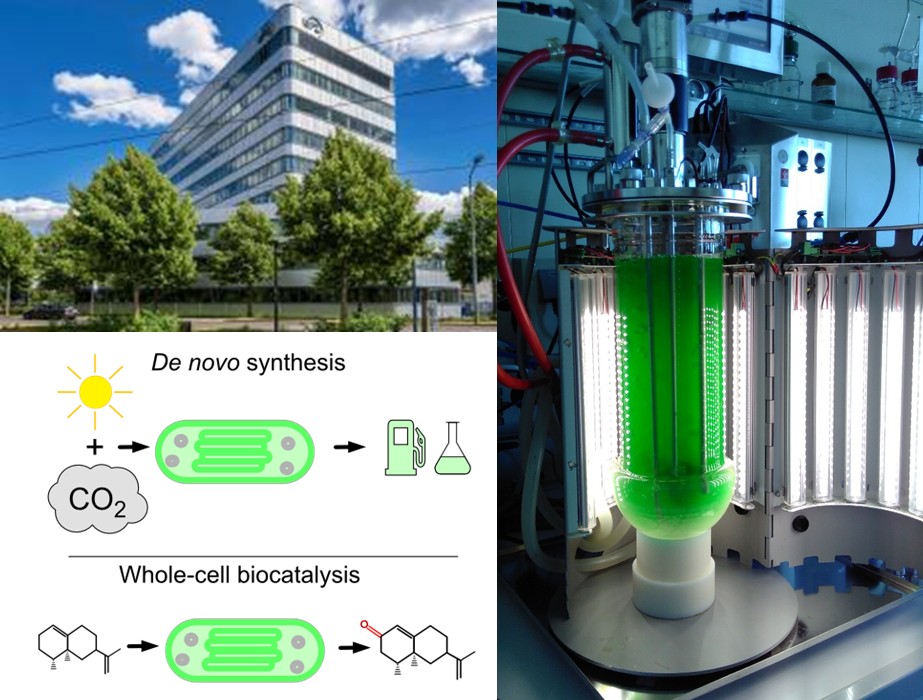
Background: Climate change, resource scarcity, and dependency on fossil fuels call for the development of sustainable ways to produce the chemicals our society needs. Photosynthetic cyanobacteria offer an exciting opportunity for the sustainable production of chemicals using the energy of the sun and CO2 while minimizing the use of resources, energy, and agricultural land.
Join us and become part of an exciting research project exploring how photosynthetic cyanobacteria can sustainably produce high-value chemicals currently derived from scarce, endangered, or non-sustainable sources.1,2
Scope: You’ll work at the intersection of biotechnology, synthetic biology, microbiology, and sustainable chemistry, developing highly efficient cell factories for the production of valuable compounds. The primary goal consists in the production3 and conversion4 of terpenoids like isoprene3 as well as high-value products for use in pharmaceutical, food, and chemical industries.
Techniques:
With us you will build skills in:
• Molecular cloning & genetic engineering techniques
• Cultivation of Cyanobacteria and E. coli
• Biochemical techniques (activity assays, expression studies)
• Advanced analytical techniques (HPLC, GC-FID…)
• Bioprocess engineering (bioreactor cultivation and control)
We offer:
• An open, international, and diverse team
• World-class, cutting-edge infrastructure
• Impactful research for a better future
Interested? Get in touch and become part of our international research community!
References:
1. Bolay, P., Toepel, J., Bühler, B. (2025) Biotechnological applications of cyanobacteria: Synechocystis and Synechococcus strains. In: Holtmann, D. (ed.) Unconventional organisms in biotechnology. Adv Biochem Eng Biotechnol 192, 155-191
2. Lupacchini, S., Appel, J., Stauder, R., Bolay, P., Klähn, S., Lettau, E., Adrian, L., Lauterbach, L., Bühler, B., Schmid, A., Toepel, J. (2021) Rewiring cyanobacterial photosynthesis by the implementation of an oxygen-tolerant hydrogenase. Metab Eng 68, 199-209
3. Janssen, K.N., Bolay, P., Tüllinghoff, A., Toepel, J., Spindler, D., Bühler, B., Lindberg, P. (2026) Engineering cyanobacteria for high-yield photosynthetic isoprene production with long-term phenotypic stability. Plant Biotechnol J 24, 1014-1030
4. Tüllinghoff, A., Djaya-Mbissam, H., Toepel, J., and Bühler, B. (2023) Light-driven redox biocatalysis on gram-scale in Synechocystis sp. PCC 6803 via an in vivo cascade. Plant Biotechnol J 21, 2074-2083.
Master thesis available on:
Enhancing light-driven oxygenase biocatalysis by using membrane uncouplers for metabolic balancing
supervisors: Dr. Adrian Tüllinghoff and Prof. Dr. Bruno Bühler
contact: adrian.tuellinghoff@ufz.de, bruno.buehler@ufz.de
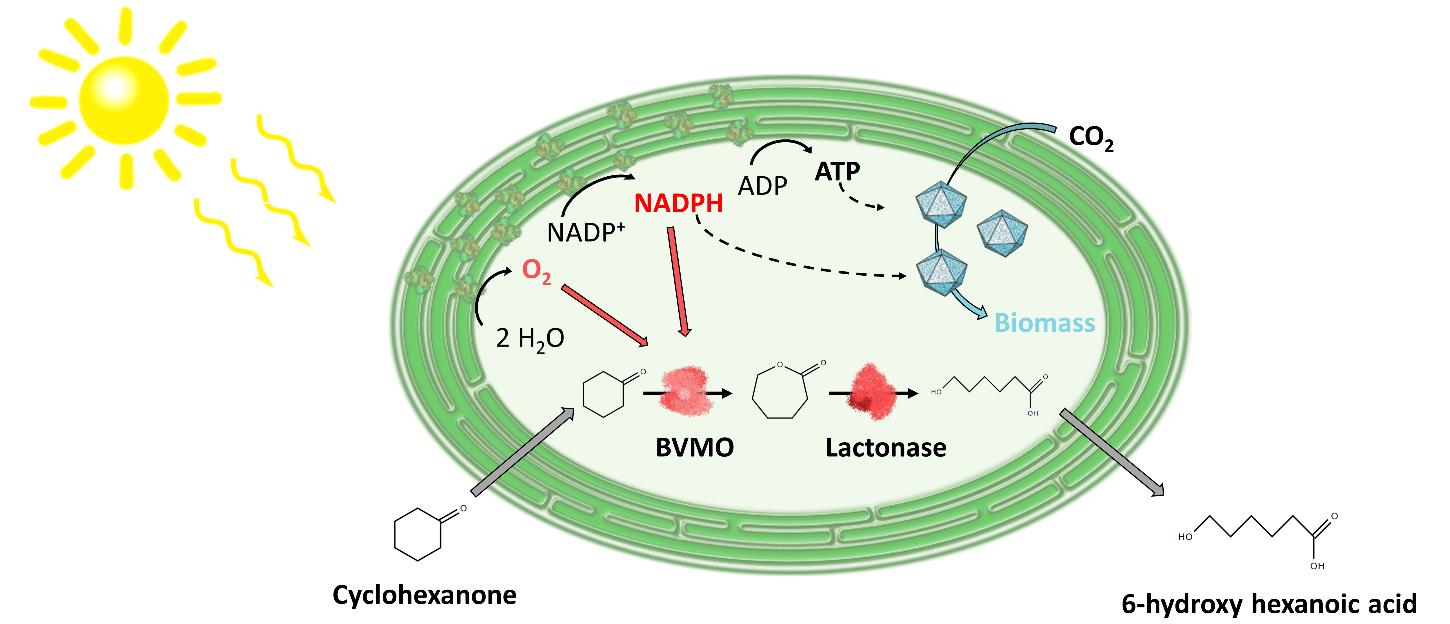
Background: To produce chemicals and goods in a truly sustainable and land-saving fashion, photo-biotechnology is a highly promising option.1 The photosynthetic apparatus of phototrophs enables the conversion of light into usable cellular energy. Cyanobacteria are ideal hosts for light-driven biocatalysis. Electron consuming biotransformations, such as oxygenase reactions, can be closely linked to the photosynthetic light reaction, giving access to light as energy and water as electron source.2, 3 The one-sided withdrawal of electron equivalents, such as NADPH, for heterologous redox reactions, however, is prone to affect photosynthetic metabolism.4 To reconstitute a more balanced ratio of ATP and NADPH levels, membrane uncouplers (uncoupling the proton gradient over the thylakoid membrane to reduce ATP formation) may help.
Scope: The impact of specific membrane uncouplers on the growth and the physiology of the model cyanobacterium Synechocystis sp. PCC 6803 is to be tested in different cultivation setups such as shaking flasks, bubble columns, and stirred-tank reactors. Further, options to enhance the biocatalytic performance of recombinant Synechocystis strains will be investigated, testing different uncoupler concentrations, time points of uncoupler supply and oxygenation rates. The findings at small scale will be transferred to photobioreactors at lab-scale to test the performance in an optimized production process. Depending on the progress, the project can be extended either by physiological characterization of the oxygenase-active biocatalyst or by testing downstream processing of the photo-biotechnological product.
Techniques:
- Biochemical techniques (activity assays, expression studies)
- Analytical techniques (HPLC, GC-FID, PAM fluorometry)
- Microbiology techniques (Cultivation of phototrophic cells, toxicity studies, microscopy)
- Bioprocess development (Feeding strategies, bioreactor cultivation and control)
References:
1. Brandenburg, F., Theodosiou, E., Bertelmann, C., Grund, M., Klähn, S., Schmid, A., and Krömer, J. O. (2021) Trans-4-hydroxy-L-proline production by the cyanobacterium Synechocystis sp. PCC 6803, Metab Eng Commun 12, e00155.
2. Hoschek, A., Toepel, J., Hochkeppel, A., Karande, R., Bühler, B., and Schmid, A. (2019) Light-dependent and aeration-independent gram-scale hydroxylation of cyclohexane to cyclohexanol by CYP450 harboring Synechocystis sp. PCC 6803, Biotechnol J 14, e1800724.
3. Tüllinghoff, A., Uhl, M. B., Nintzel, F. E., Schmid, A., Bühler, B., and Toepel, J. (2022) Maximizing photosynthesis-driven Baeyer-Villiger oxidation efficiency in recombinant Synechocystis sp. PCC 6803, Front Catal 1, art. 780474.
4. Tüllinghoff, A., Djaya-Mbissam, H., Toepel, J., and Bühler, B. (2023) Light-driven redox biocatalysis on gram-scale in Synechocystis sp. PCC 6803 via an in vivo cascade, Plant Biotechnol J 21, 2074-2083.