
Department Systemic Environmental Biotechnology (SUBT)
Systemic solutions for liveable and climate-resilient cities
Our vision is for liveable and climate-resilient cities in which water, green spaces, energy and urban infrastructures are considered as an integrated system and managed sustainably.
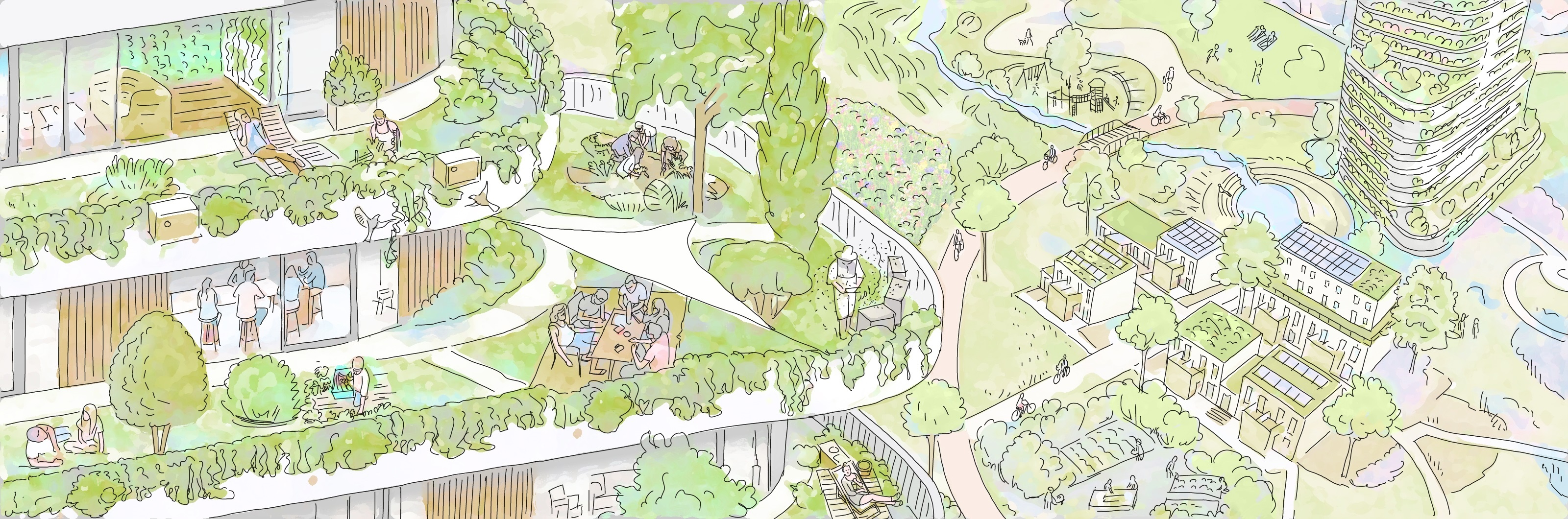 Drawing of a successful blue-green infrastructure ©Artkolchose
From individual solutions to the urban system
In the Department of Systemic Environmental Biotechnology (SUBT), we develop solutions for the sustainable transformation of cities and put them into practice.
Our strength lies in our systemic perspective: We do not consider water, green spaces, energy and urban infrastructures separately, but investigate how technical and nature-based solutions can be combined and optimally integrated into the urban system.
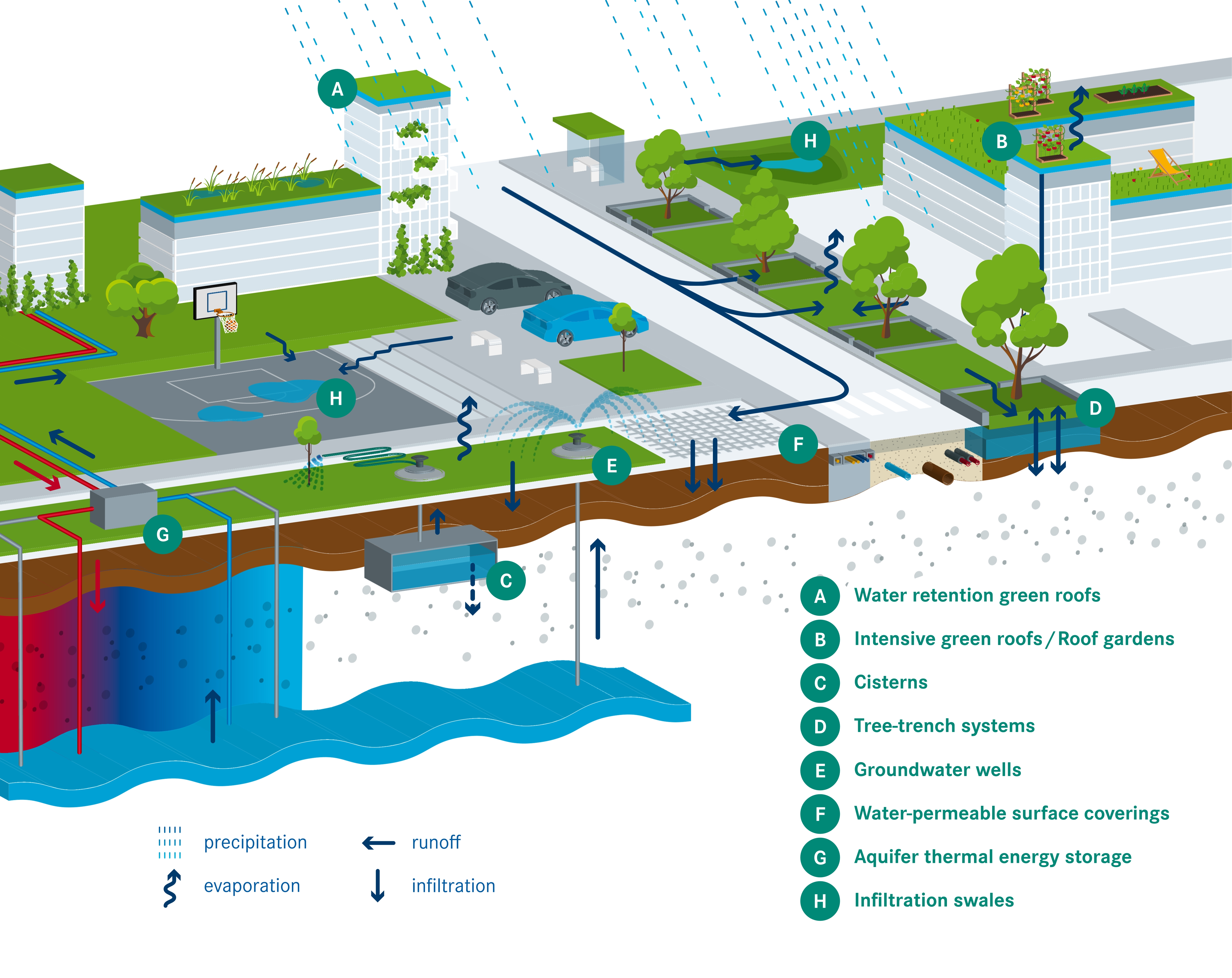 Water, green spaces and energy as an integrated system in urban areas ©UFZ/Artkolchose
For this, we combine two core competencies: The Environmental and Bioprocess Technology (UBPT) working group develops and tests innovative environmental technologies for urban areas. The Water-Sensitive Infrastructure Planning (WSIP) working group develops models and planning tools that can be used to spatially assess and combine solutions and transfer them to different cities and neighbourhoods.
In this way, we combine technology development and modelling with real-world requirements from cities and municipalities – from the development of individual solutions to their interaction within the urban system.Research that reaches cities
In line with the UFZ's Planetary Solutions approach, we work with partners from municipalities, politics, business and science to further develop research towards practical application. Our projects focus on different areas:URBAN LE
Do you want to develop integrated solutions for water, green spaces and energy and test them under real-world conditions?
URBAN LE combines technologies, digital twins and real-world laboratories for climate-resilient urban development.
UBGI
Do you want to know how blue-green infrastructure can effectively contribute to a climate-resilient city?
UBGI investigates its diverse benefits and develops solutions for a successful blue-green transformation.
BGCC
Do you seek proven approaches to implementing blue-green infrastructure?
BGCC develops transferable model solutions based on the experiences of ten cities, covering infrastructure planning, legal frameworks, politics and administration, as well as costs, benefits and financing.
UFZ Stadtbüro
Do you need scientific support for your specific project?
Commission the UFZ Stadtbüro to provide analyses, modelling and scientifically sound decision-making support for your municipal planning.
Implementing solutions together
The transformation towards climate-resilient cities succeeds through collaboration between research and practice. We therefore work with cities and municipalities, politics and administration, companies, planning offices and scientific partners.
We develop and test technologies, model their impacts within the urban system and create a basis for planning and implementation decisions. At the same time, requirements and experiences from practice feed back into our research.
In this way, scientific findings are transformed into solutions that are tailored to real-world requirements and can be transferred to other cities and neighbourhoods.
 Stadt Göttingen.jpg "Blue-green infrastructure in the urban area of Göttingen. © City of Göttingen") Blue-green infrastructure in the urban area of Göttingen. © City of Göttingen
Blue-green infrastructure in the urban area of Göttingen. © City of Göttingen