
Diversity-Sensitive Imagery

Images have a greater impact than words. They shape who feels included and who feels excluded. This effect is particularly strong in recruitment and public relations, because images convey values, expectations, and an idea of who is “meant” to be included.
Research clearly shows:
- People are more confident in their abilities when they see images of people who resemble them in appearance or background – especially in successful or leadership roles (Born et al., 2023, p. 60).
- For men, the gender of their role models plays hardly any role; for women, on the other hand, female role models have a particularly empowering effect (ibid.).
- 67% of applicants draw direct conclusions about a company's culture from the images in job advertisements (StepStone Diversity Study, 2022).
Diversity-sensitive imagery counteracts this dynamic. It supports a corporate culture in which different people feel addressed, seen, and welcome.
In short: those who make diversity visible win—in terms of talent, credibility, and impact.
Recognizing and Avoiding Stereotypes and Clichés
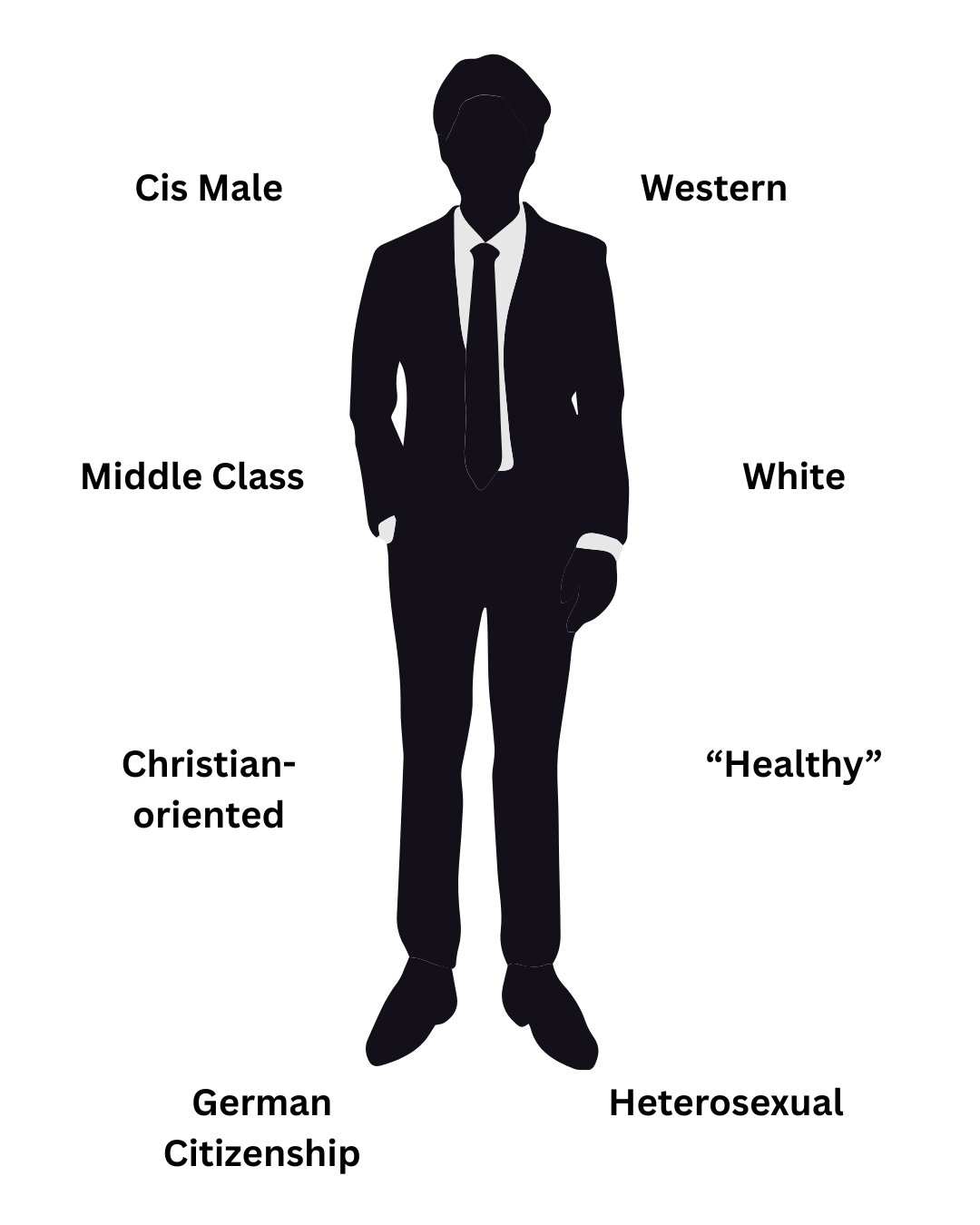 Own graphic, inspired by Goethe University 2016
Common stereotypes
Own graphic, inspired by Goethe University 2016
Common stereotypes
In order to implement diversity-sensitive imagery, it is worth taking a conscious look at stereotypical representations. Certain clichés are often repeated—often unconsciously—which reduce people to roles or exoticize certain groups. The following examples can help to recognize and avoid such patterns:
- Women listen (passive), men explain (active)
- Women in care roles vs. men in leadership positions
- Portraying people with disabilities only as “helpless” or “superheroes”
- Wheelchairs as a central motif, not part of the work context
- Exoticization: Portraying people of color exclusively in culturally marked contexts, e.g., in traditional clothing, at ethnically connoted festivals, or in scenes that emphasize “foreignness” instead of showing them in everyday or professional contexts
Tools for reflection
The following reflection questions help you critically examine your own image selections:
- Reverse test: “Would this representation be appropriate for every group of people?”
- Change of perspective: “Do I feel represented?”
- Feedback: “What do the people around me or representatives (e.g., commissioners, experts, etc.) say about this?”
If We Want To Attract People With Different Perspectives, We Must:
- Make diversity visible – represent people of different age groups, gender identities, origins, body types, religions, and disabilities.
- Avoid stereotypes – no clichéd attributions or symbolic images. No reduction to individual characteristics (e.g., headscarf = sole distinguishing feature).
- Demonstrate agency – portray marginalized people as active agents (e.g., as speakers, leaders, explainers, not just listeners).
- Consider accessibility – use alternative texts, subtitles, high-contrast design, simple and, if necessary, easy language.
- Check composition and reflect on hierarchies – who is at the center? Who appears active, who passive? Which lines of sight, focal points, and repetitions influence the effect?
- Reflection and sensitivity – question your own assumptions, seek feedback from different groups.
What Can Images Do? And What Can't They Do?
Diversity-sensitive imagery does not mean depicting all possible diversity characteristics in an image or visibly “exhibiting” people based on individual characteristics. It does not reduce people to their membership in certain groups and does not stage diversity that is not actually lived in one's own environment, because images always shape the values that an organization stands for.
Instead, diversity-sensitive image design opens up spaces in which different people can appear as a matter of course – without coercion and without tokenism. It shows authentic everyday and work situations, portraying people based on their skills rather than individual characteristics. And it considers diversity in the long term: not as a selective decoration, but as an expression of an inclusive culture.DO:
- Actively and equally represent different dimensions of diversity
- Use real employees instead of stock images
- Understand visual language as part of strategic DEI communication
DON'T:
- Using token images (depicting “diversity” only in symbolic motifs)
- Reducing people to outward appearances or stereotypical characteristics
- Communicating diversity only in marginal topics (e.g., inclusion) – not in key messages or leadership
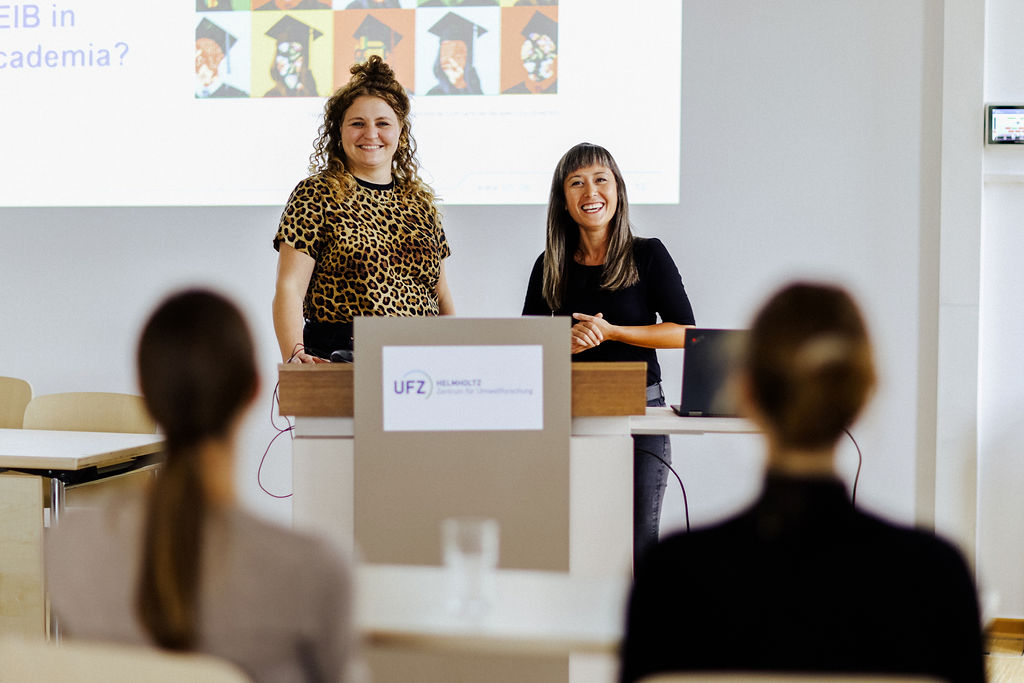
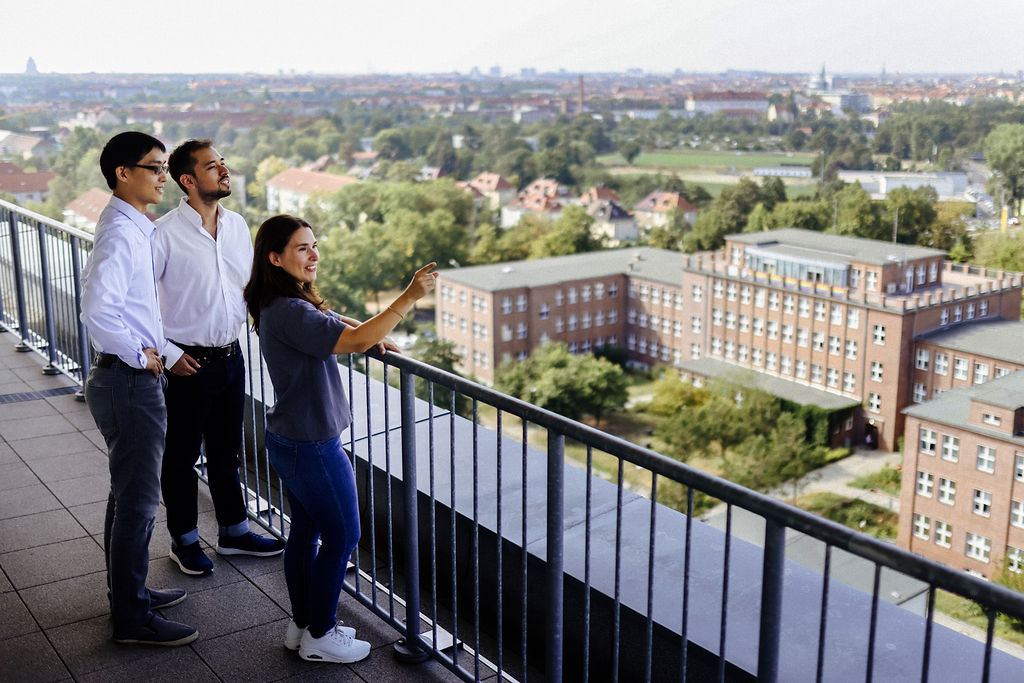
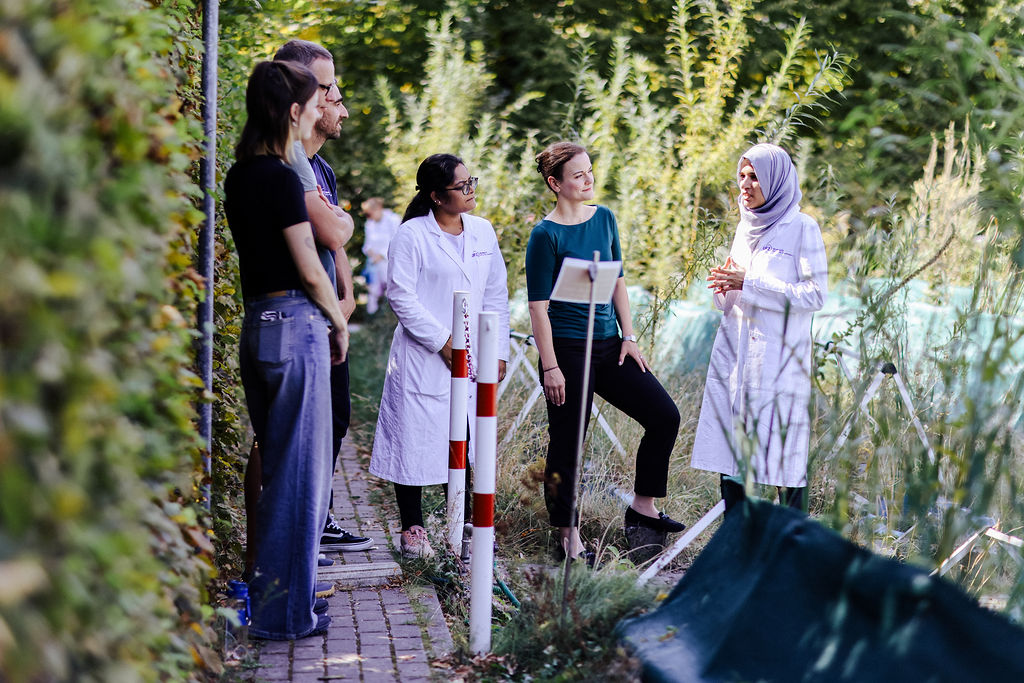
Best practice examples at the UFZ
Here you will find a selection of photos taken at the UFZ that serve as best practice examples of diversity-sensitive imagery.










Materials On Diversity-Sensitive Imagery
Diversity-sensitive imagery means pausing and taking a closer look: Who is visible? Who is missing? What roles are we showing? The materials from the WAY TO UFZ project (one-pager and reader) invite you to explore these questions together.UFZ employees can also contact us if they would like to use the presentation on diversity-sensitive imagery in recruitment for their team, department, or an event. We are happy to assist. Email us at kerstin.schmitt@ufz.de
- Bailey, Kristina J.; LaFrance, Marianne; Lytle, Alex (2022): Addressing Gender Bias in Job Titles: From ‘Master’ to ‘Head’. In: Yale University Press.
- Bezrukova, Katerina; Caleo, Suzette; Heilman, Madeline (2019): „Effects of Unconscious Bias Trainings: A Meta-Analytic Review“. In: Journal of Organizational Behavior.