
Computational Social Sciences for Extreme Events
Our group investigates the interactions between society and extreme events using natural language processing, network analysis, and systems theory. Our research lies at the intersection of computational social science, socio-hydrology, and environmental science.
Our long-term goals are to:
- understand fundamental questions on how hazards translate into disasters
- investigate the relationship between adaptation measures and risk reduction
- monitor the diverse consequences of extreme events to society
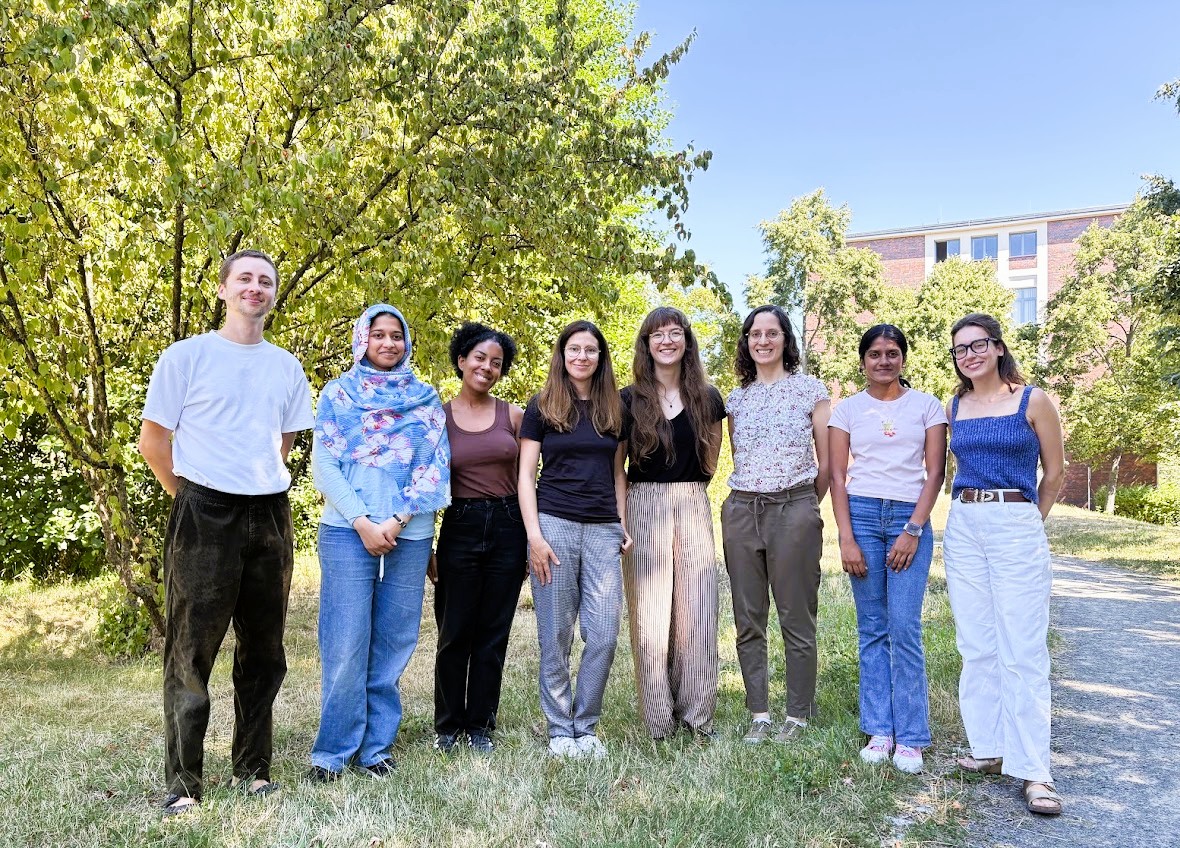
Team





Emanuel Fusinato (PhD candidate)

Marius Behret (PhD candidate)

Raham Jamal Taha Saleem (PhD candidate)

Rafael Pereira (guest PhD candidate)

Jéssica Pinheiro (PhD candidate)

Shiny V. S. Selvaraj (Student researcher)
Shuai Li (upcoming PhD candidate)
Jing Ning (upcoming PhD candidate)
Alumni
| 2023-2026 | Dr. Taís N. Carvalho | Now a Full Professor at Sao Paulo University (USP) |
| 2025-2026 | Dr. Sungju Han | Now at Potsdam University |
| 2024-2025 | Dr. Jan Sodoge | Now at Technopolis Group |
| 2021-2024 | Dr. Jan Sodoge | Potsdam University (summa cum Laude) |
| 2021-2025 | Dr. Ebenezer Yiwo | University of Valencia |
| 2021-2023 | Dr. Franciele M. Vanelli | Federal University of Rio Grande do Sul |
| 2019-2022 | Dr. Luana L. Moreira | Federal University of Rio Grande do Sul |
| 2026-2027 | Steffen Sippel | Hamburg University |
| 2026-2026 | Camila I. H. Bautista | Weimar University |
| 2025-2026 | Isabela B. Freire | TU Dresden and SCADS AI |
| 2025-2026 | Linus Stieler | University of Graz |
| 2024-2025 | Victoria Sinner | Potsdam University |
| 2024-2025 | Anouck Sebol | University of Graz |
| 2024-2024 | Philip Bergforth | Freie Universität Berlin |
| 2021-2023 | Emanuel Fusinato | Federal University of Rio Grande do Sul |
| 2026 | Dr. Riccardo Biella | visiting researcher; Helmholtz Grant |
| 2026 | Rafaela Campos | visiting Master student; FAPESP Grant |
| 2026 |
Bram Valkenborg |
visiting PhD student; Vrije Universiteit Brussel |
| 2026 | Jeanne Claire Fernandez | visiting PhD student; Uppsala University |
| 2026 | Debraj Deka | visiting Master student; ERASMUS+ Grant |
| 2026 | Zixin Hu | visiting PhD student; HIDA Grant |
| 2025 | Prof. Melissa Haeffner | visiting researcher; Helmholtz Grant |
| 2025 | Dr. Stefano Terzi | visiting researcher; Helmholtz Grant |
| 2025 | Dr. Gabriela Chiquito Gesualdo | visiting researcher; Helmholtz Grant |
| 2025 | Dr. Sara Linderson | visiting researcher; Helmholtz Grant |
| 2025 | Cecily (Jingxian) Wang | visiting PhD student |
| 2025 | Ni Li | visiting PhD student |
| 2025 | Dr. Violeta Berdejo-Espinola | visiting researcher; HIDA grant |
| 2025 | Alessia Matano | visiting PhD student; HIDA grant |
| 2023 | Katie Rohrbaugh | visiting bachelor student |
| 2022 | Prof. Maaz Amjad | visiting researcher; HIDA grant |
| 2021 | Bharat Govil | visiting bachelor student |
Our tools and datasets
EGU abstract recommender by Dr. Jan Sodoge
EGU abstract explorer by Dr. Taís M. N. Carvalho
German drought impact monitor by Dr. Jan Sodoge
Ongoing projects
IDEAS: Helmholtz School for Integrated Data Science in Environmental and Life Sciences (2026 – 2030)
IDEAS is a joint research school of the Helmholtz Centres UFZ and HZDR, developed in close collaboration with strong university partners. It provides an excellent interdisciplinary environment for research, training, and networking.
CLIMES DN brings together expertise from climate science, hydrology, urban sociology, electrical engineering, data science, epidemiology and more. Doctoral candidates work on research projects that cut across these fields, supported by an internationally-leading supervisory team.
In4NILE addresses the critical lack of water quality information in the Nile River Basin. We combine harmonized basin-scale data integration, tailored monitoring approaches, text-mined information on local impacts, and advanced modelling to inform decision-making and guide investments. (PhD 1) synthesizes spatial data on key pollution drivers, (PhD 2) develops chemical monitoring strategies under low-capacity conditions, (PhD 3) applies natural language processing to map reported risks and impacts, and (PhD 4) integrates these data into spatially explicit multi-pollutant models to identify hotspots and future scenarios. Together, the projects contribute to an integrated Nile Basin Knowledge Hub
Our group will focus on the dynamics of climate change discourse in the media, among the online public, and political actors. Specifically, we will examine three aspects of public discourse: (a) collective attention––the shared focus of a group or society on a particular topic, event, or issue at a given time; (b) collective memory––the associations made between current and past events in media articles, online search queries, or political speeches and (c) framing––the persuasive aspect of “how” issues are discussed and the political logic and cultural frameworks it is related to.
Longer-lasting meteorological and hydrological droughts are foreseeable in Germany, with direct implications for the storage and access to water in cities. Furthermore, an increased risk of conflicts over water allocation between urban and rural areas is expected. Within this context, Thirsty Cities investigates pathways for enhancing the resilience to water scarcity in Germany. A focus is given to the impacts of the shortage of freshwater and the assessment of whether current regulatory frameworks are “fit for purpose”.
Hydroclimatic extremes under climate change seriously threaten society and the environment. The prevailing focus on single hazards fails to capture the complex interplay among drivers behind extreme impacts, potentially leading to maladaptation. The SEESAW PhD cohort aims to improve our current understanding of the interactions between hydroclimatic extremes and their complex impacts on society and the environment by 1) uncovering the non-linear relationships between hydroclimatic hazards, 2) quantifying the impacts of these hazards and 3) disentangling the role of human-induced climate change play in their generation at national and continental scales.
Past projects
Extreme climate events routinely cause adverse environmental and socio-economic impacts. Mitigating these impacts requires understanding how they link to climatic drivers. However, existing freely-available climate hazard impact databases are often designed for rapid reporting and have limitations in terms of completeness and accuracy. While a wealth of detailed climate impact information is available from online text sources such as news websites and reports, its extraction by human experts is time-consuming, and they are thus not typically used in impact databases.
We seek to overcome this gap by producing a holistic European multi-sector impacts database of climate extremes, from mining of online text sources. We will consider extreme events such as windstorms, droughts, floods and temperatures extremes. By using NLP techniques, each extreme event will be assigned a date range, location and socio-economic and environmental impacts. These will then be cross-checked against climate data.
In this project, we address the increasing impacts of hydrological extremes, such as floods and droughts, by investigating their driving factors: hazard, exposure, vulnerability, and adaptation. Focusing on the Central European river basins (e.g., Danube, Rhine, Elbe, Weser, Oder), the project employs a dual temporal perspective—spanning 500 years of historical data and contemporary records since 1990.
EXTREME-ADAPT overarching ambition is to offer a systemic perspective on the historical and contemporary factors influencing flood and drought risk in Central Europe. This interdisciplinary project bridges AI, engineering, and hydroclimatology to provide actionable insights for climate adaptation.
Publications
2026 (20)
- Alivio, M.B., Potočki, K., Raška, P., Ameh Adegede, P., Mehedi Adyel, T., Aksoy, H., Bourke, M., Cavus, Y., de Brito, M.M., Dembélé, M., Elmoustafa, A.M., Förster, K., Han, S., Howard, B.C., Jia, H., Kohnova, S., Koren, G., Nunes Carvalho, T.M., Ochoa-Sánchez, A., Ouachani, R., Pavlović, D., Relf, J., Santos Ferreira, C.S., Schmitz, K., Thaler, T., Todorović, A., Wang, C., Wang, L., Wang, S., Zokou Yao, F., Yonaba, R., Yoon, J., Bezak, N. (2026):
Global perspectives on the curricular integration of nature-based solutions in hydrology and water resources management education
J. Clean Prod. 575 , art. 149303
10.1016/j.jclepro.2026.149303 - Biella, R., Shyrokaya, A., Pechlivanidis, I., Cid, D., Llasat, M.C., Tootoonchi, F., Wens, M., Lam, M., Stenfors, E., Sutanto, S., Ridolfi, E., Ceola, S., Alencar, P., Di Baldassarre, G., Ionita, M., de Brito, M.M., McGrane, S.J., Moccia, B., Nagavciuc, V., Russo, F., Krakovska, S., Todorovic, A., Trambauer, P., Vignola, R., Teutschbein, C. (2026):
Lessons learned in institutional preparedness and response during the 2022 European drought
Nat. Hazards Earth Syst. Sci. 26 (2), 955 - 979
10.5194/nhess-26-955-2026 - Castelli, G., Wassar, F., Bresci, E., Piemontese, L., Nüsser, M., Ocampo-Melgar, A., de Brito, M.M. (2026):
Editorial: Sociohydrology in drylands
Front. Environ. Sci. 14 , art. 1817593
10.3389/fenvs.2026.1817593 - Di Baldassarre, G., Brandimarte, L., de Brito, M.M., Mukherjee, J., Rusca, M. (2026):
Towards equitable hydrological data in the age of Earth observations and artificial intelligence
Nat. Water
10.1038/s44221-026-00706-w - Di Baldassarre, G., de Brito, M.M., Lindersson, S., Albrecht, F., Rusca, M. (2026):
Breaking vicious cycles of hydrological disasters and socioeconomic inequalities
Hydrol. Sci. J.-J. Sci. Hydrol. 71 (2), 191 - 198
10.1080/02626667.2025.2593331 - Freudiger, A., Kestel, N., Jovanovic, V.M., de Brito, M.M., Ruiz-Lambides, A.V., Nowick, K., Widdig, A., Ringbauer, H. (2026):
Systematic literature review of studies applying genetic relatedness estimation [Data set]
Zenodo
10.5281/zenodo.20139046 - Freudiger, A., Kestel, N., Jovanovic, V.M., de Brito, M.M., Ruiz-Lambides, A.V., Nowick, K., Widdig, A., Ringbauer, H. (2026):
Genetic estimates of relatedness: established practices and new opportunities through low coverage whole-genome sequencing
Mol. Ecol. 35 (11), e70375
10.1111/mec.70375 - Hasbini, L., Severino, L.G., de Brito, M.M., Chiquito Gesualdo, G., Rotaru, A.M., Bresch, D.N., Mühlhofer, E., Wang, J., Nunes Carvalho, T.M. (2026):
ROUGE: A database of disaster impacts in the Global South using Red Cross reports and Large Language Models
Sci. Data
10.1038/s41597-026-08159-2 - Höllermann, B., de Brito, M.M., Pande, S., Sivapalan, M. (2026):
Rethinking water security: integrating justice, governance, and socio-hydrological dynamics
Front. Water 8 , art. 1843836
10.3389/frwa.2026.1843836 - Kornhuber, K., Bevacqua, E., de Brito, M.M., Jäger, W.S., Rivoire, P., Rogers, C.D.W., Banfi, F., Batibeniz, F., Carruthers, J., De Michele, C., De Angeli, S., Deidda, C., de Ruiter, M.C., Fink, A.H., Goulart, H.M.D., Küpfer, K., Ludwig, P., Maraun, D., Messori, G., Nath, S., O'Loughlin, F., Pinto, J.G., Poschlod, B., Ramos, A.M., Raymond, C., Ribeiro, A.F.S., Singh, D., Suarez Gutierrez, L., Ward, P.J., White, C.J. (2026):
Invited perspectives: Towards usable compound event research
Nat. Hazards Earth Syst. Sci. 26 (9), 4309 - 4334
10.5194/nhess-26-4309-2026 - Kreibich, H., Yu, D.J., Brozović, N., Ceola, S., de Brito, M.M., Quesnel Seipp, K., Schröter, K., Walker, D.W. (2026):
Data needs and acquisition
In: Tian, F., Wei, J., Haeffner, M., Kreibich, H. (eds.)
Coevolution and prediction of coupled human-water systems: A sociohydrologic synthesis of change in hydrology and society
Elsevier, p. 139 - 207
10.1016/B978-0-443-41736-8.00002-6 - Kumari, C., Shukla, R., Maskell, G., Nunes Carvalho, T.M., Riar, A., Gornott, C. (2026):
Beyond soil health and input reduction: gaps in the social dimension of agroecology research in India: a review
Agroecol. Sustain. Food Syst.
10.1080/21683565.2026.2710291 - Li, N., Thiery, W., Zahra, S., de Brito, M.M., Worou, K., Kurfalı, M., Lampe, S., Muñoz, P., Flynn, C., Trigoso, C., Nivre, J., Zscheischler, J., Messori, G. (2026):
Wikimpacts — A global climate impact database based on automated information extraction from Wikipedia
Bolin Centre Database
10.17043/li-2025-wikimpacts-1.0.final - Li, N., Thiery, W., Zahra, S., de Brito, M.M., Worou, K., Kurfalı, M., Lampe, S., Muñoz, P., Flynn, C., Trigoso, C., Nivre, J., Zscheischler, J., Messori, G. (2026):
Wikimpacts 1.0: a new global climate impact database based on automated information extraction from Wikipedia
Nat. Hazards Earth Syst. Sci. 26 (6), 2609 - 2636
10.5194/nhess-26-2609-2026 - Pereira Santos, A., De Angeli, S., Hanf, F.S., Mirbach, C., van Maanen, N., Benson, V., de Ruiter, M.C., Dunant, A., Terzi, S., Schweizer, P.-J., Nunes Carvalho, T.M., de Brito, M.M., De Polt, K., Šakić Trogrlić, R., van den Homberg, M. (2026):
Workshop report—Vulnerability in multi-hazard risks: Addressing its complexity and dynamics
iScience 29 (4), art. 115250
10.1016/j.isci.2026.115250 - Petrucci, O., Papagiannaki, K., Diakakis, M., Badoux, A., Bănescu, A.-I., Brázdil, R., Carvalho, T.M.N., Chromá, K., de Brito, M.M., Ioana-Toroimac, G., Kahraman, A., Kılıç, Ö., Krahn, A., Kreibich, H., Liechti, K., Llasat, M.C., Llasat-Botija, M., Macdonald, N., Moroșanu-Mitoșeriu, G.A., Orieschnig, C., Pereira, S., Řehoř, J., Rossello Geli, J., Sima, M., Thieken, A.H., Vinet, F., Zaharia, L., Zenker, M.-L. (2026):
FFEM-DB 2.0: an updated and extended spatio-temporal dataset of flood fatalities occurred from 1980 to 2024 in the Euro-Mediterranean region
Sci. Data
10.1038/s41597-026-07511-w - Reckhaus, Z., Apel, H., Bubeck, P., Thieken, A.H., Fleischhauer, M., Stein, C., Steudtner, F., Michalski, D., de Brito, M.M., Han, S., Kuhlicke, C., Merz, B., Greiving, S., Hasse, J., Otto, D., Fuchs, M., Truedinger, A., Wolf, S., Vorogushyn, S., Juepner, R., Schuettrumpf, H., Samprogna, G., Zenker, M.-L., Birkmann, J. (2026):
Building Back Better: strengthening resilience and supporting climate adaptation in the aftermath of the 2021 flood in Germany — Insights from a transdisciplinary research project
Wiley Interdiscip. Rev.-Water 13 (4), e70084
10.1002/wat2.70084 - Sinner, V., Nunes Carvalho, T.M., Modekurty, S., Kuhlicke, C., de Brito, M.M. (2026):
Gaps and opportunities in climate adaptation across South American cities: A systematic analysis of local plans
Urban Climate 68 , art. 103007
10.1016/j.uclim.2026.103007 - Sodoge, J., Kuhlicke, C., Di Baldassarre, G., Fleckenstein, J.H., Ebeling, P., de Brito, M.M. (2026):
Emerging hotspots of groundwater conflicts during droughts in Germany
iScience 29 (7), art. 116338
10.1016/j.isci.2026.116338 - Vanelli, F.M., Monteiro, L.R., Kobiyama, M., de Brito, M.M. (2026):
An analysis of flood risk changes over time through a paired events approach in Southern Brazil
Clim. Risk Manag. , art. 100883
10.1016/j.crm.2026.100883
2025 (12)
- Bartkowski, B., Baaken, M.C., Nagpal, M., Sodoge, J., de Brito, M.M. (2025):
What constitutes sustainable agriculture for different audiences in Germany? A comparative analysis of large-scale text data
People Nat. 7 (3), 715 - 730
10.1002/pan3.70003 - Biella, R., Shyrokaya, A., Ionita, M., Vignola, R., Sutanto, S.J., Todorovic, A., Teutschbein, C., Cid, D., Llasat, M.C., Alencar, P., Matanó, A., Ridolfi, E., Moccia, B., Pechlivanidis, I., van Loon, A., Wendt, D.E., Stenfors, E., Russo, F., Vidal, J.-P., Barker, L., de Brito, M.M., Lam, M., Bláhová, M., Trambauer, P., Hamed, R., McGrane, S.J., Ceola, S., Bakke, S.J., Krakovska, S., Nagavciuc, V., Tootoonchi, F., Di Baldassarre, G., Hauswirth, S., Maskey, S., Zubkovych, S., Wens, M., Tallaksen, L.M. (2025):
The 2022 drought needs to be a turning point for European drought risk management
Nat. Hazards Earth Syst. Sci. 25 (11), 4475 - 4501
10.5194/nhess-25-4475-2025 - Castelli, G., Howard, B.C., Adyel, T.M., AghaKouchak, A., Agramont, A., Aksoy, H., Alba, R., Alencar, P.H.L., Amanambu, A.C., Aslam, H., Bharati, L., Bos-Burgering, L., Bresci, E., Caramiello, C., Cavus, Y., Chaudhari, K., Chifflard, P., Choukrani, H., Chun, K.P., Cudennec, C., Cumiskey, L., Dakhlaoui, H., De Angeli, S., de Brito, M.M., Dembelé, M., Dewals, B., Elshenawy, A., Gwapedza, D., Hall, C., Hermans, L., Höllermann, B., Jaramillo, F., Jomaa, S., Koren, G., Krause, S., Lahsaini, M., Mahé, G., Manfreda, S., Maynard, C., Merheb, M., Nóbrega, R.L.B., Ocampo-Melgar, A., Olusola, A., Orduna Alegria, M.E., Owusu, A., Pacetti, T., Panchanathan, A., Panda, S., Piemontese, L., Pradhananga, D., Shobha Ajin, R., Rusca, M., Scolobig, A., Thaler, T., Tran, B.N., Triml-Chifflard, D., Vanelli, F.M., Villani, L., Walker, D.W., Zarif, F., Buytaert, W., Ceperley, N. (2025):
Co-creating water knowledge: a community perspective
Hydrol. Sci. J.-J. Sci. Hydrol. 70 (16), 2899 - 2919
10.1080/02626667.2025.2571065 - Cavalcante, L., Kchouk, S., Ribeiro Neto, G., Melsen, L., van Oel, P., Dewulf, A., Walker, D., Pot, W., de Brito, M.M., Nunes Carvalho, T.M. (2025):
Data underlying the publication: From insufficient rainfall to livelihoods: understanding the cascade of drought impacts and policy implications
4TU.ResearchData
10.4121/ee5c62e1-438a-4a29-be00-1d736579b0e1.v1 - Cavalcante, L., Walker, D.W., Kchouk, S., Ribeiro Neto, G., Nunes Carvalho, T.M., de Brito, M.M., Pot, W., Dewulf, A., van Oel, P. (2025):
From insufficient rainfall to livelihoods: understanding the cascade of drought impacts and policy implications
Nat. Hazards Earth Syst. Sci. 25 (6), 1993 - 2005
10.5194/nhess-25-1993-2025 - de Brito, M.M., Sodoge, J., Kreibich, H., Kuhlicke, C. (2025):
Comprehensive assessment of flood socioeconomic impacts through text-mining
Water Resour. Res. 61 (1), e2024WR037813
10.1029/2024wr037813 - Fusinato, E., Han, S., Kobiyama, M., de Brito, M.M. (2025):
Unintended consequences of public policies in increasing risk: the safe development paradox in the Revólver basin, Brazil
Int. J. Disaster Risk Reduct. 128 , art. 105697
10.1016/j.ijdrr.2025.105697 - Kreibich, H., Sivapalan, M., AghaKouchak, A., Addor, N., Aksoy, H., Arheimer, B., Arnbjerg-Nielsen, K., Vail-Castro, C., Cudennec, C., de Brito, M.M., Di Baldassarre, G., et al. (2025):
Panta Rhei: a decade of progress in research on change in hydrology and society
Hydrol. Sci. J.-J. Sci. Hydrol. 70 (7), 1210 - 1236
10.1080/02626667.2025.2469762 - Modekurty, S., Nunes Carvalho, T.M., Li, N., Kuhlicke, C., de Brito, M.M. (2025):
Global mapping of urban climate adaptation derived from text-mining of local plans
EGU General Assembly 2025, Vienna, Austria, 27 Apr–2 May 2025
EGUsphere
Copernicus Publications, EGU25-1046
10.5194/egusphere-egu25-1046 - Papalexiou, S.M., Mascaro, G., Pendergrass, A.G., Mamalakis, A., de Brito, M.M., Andreadis, K.M., Schiro, K., Zaerpour, M., Hatami, S., Gavasso-Rita, Y.L., Ballarin, A.S., Vargas Godoy, M.R., Nerantzaki, S., Abdelmoaty, H., Matin, M.A., Madani, K. (2025):
Sustainability Nexus AID: storms
Sustainability Nexus Forum 33 , art. 1
10.1007/s00550-024-00544-y - Sodoge, J., Nunes Carvalho, T.M., de Brito, M.M. (2025):
GC Insights: Breaking the silos – leveraging natural language processing (NLP) to encourage interdisciplinary interaction at the European Geosciences Union (EGU)
Geosci. Commun. 8 (3), 191 - 196
10.5194/gc-8-191-2025 - Wang, J., Castelletti, A., de Brito, M.M., Pernici, B. (2025):
Drought perceived impacts via text mining of social media
Environmental Research: Water 1 (4), art. 045007
10.1088/3033-4942/ae2e37
2024 (15)
- Alencar, P.H.L., Sodoge, J., Paton, E.N., de Brito, M.M. (2024):
Flash droughts and their impacts - using newspaper articles to assess the perceived consequences of rapidly emerging droughts
Environ. Res. Lett. 19 (7), art. 074048
10.1088/1748-9326/ad58fa - Arheimer, B., Cudennec, C., Castellarin, A., Grimaldi, S., Heal, K.V., de Brito, M.M., Mahé, G., et al. (2024):
The IAHS Science for Solutions decade, with Hydrology Engaging Local People IN a Global world (HELPING)
Hydrol. Sci. J.-J. Sci. Hydrol. 69 (11), 1417 - 1435
10.1080/02626667.2024.2355202 - de Brito, M.M., Sodoge, J., Fekete, A., Hagenlocher, M., Koks, E., Kuhlicke, C., Messori, G., de Ruiter, M., Schweizer, P.-J., Ward, P.J. (2024):
Uncovering the dynamics of multi-sector impacts of hydrological extremes: A methods overview
Earth Future 12 (1), e2023EF003906
10.1029/2023ef003906 - de Brito, M.M., Sodoge, J. (2024):
Computational Social Sciences in der Umweltsoziologie
In: Sonnberger, M., Bleicher, A., Groß, M. (Hrsg.)
Handbuch Umweltsoziologie
Springer VS, Wiesbaden , S. 521 - 535
10.1007/978-3-658-37218-7_14 - Eisenhauer, N., Frank, K., Weigelt, A., Bartkowski, B., Beugnon, R., Liebal, K., Mahecha, M., Quaas, M., Al-Halbouni, D., Bastos, A., Bohn, F.J., de Brito, M.M., Denzler, J., Feilhauer, H., Fischer, R., Fritsche, I., Guimaraes-Steinicke, C., Hänsel, M., Haun, D.B.M., Herrmann, H., Huth, A., Kalesse-Los, H., Koetter, M., Kolleck, N., Krause, M., Kretschmer, M., Leitão, P.J., Masson, T., Mora, K., Müller, B., Peng, J., Pöhlker, M.L., Ratzke, L., Reichstein, M., Richter, S., Rüger, N., Sánchez-Parra, B., Shadaydeh, M., Sippel, S., Tegen, I., Thrän, D., Umlauft, J., Wendisch, M., Wolf, K., Wirth, C., Zacher, H., Zaehle, S., Quaas, J. (2024):
A belowground perspective on the nexus between biodiversity change, climate change, and human well-being
Journal of Sustainable Agriculture and Environment 3 (2), e212108
10.1002/sae2.12108 - Fusinato, E., Han, S., Kobiyama, M., de Brito, M.M. (2024):
Unintended consequences of disaster mitigation: A systematic review of the safe development paradox
Research Square
10.21203/rs.3.rs-3941568/v1 - Fusinato, E., Han, S., Kobiyama, M., de Brito, M.M. (2024):
Safe development paradox: evidence and methodological insights from a systematic review
Nat. Hazards 120 (15), 13693 - 13714
10.1007/s11069-024-06774-z - Kuhlicke, C., de Brito, M.M., Otto, D., Reckhaus, Z. (2024):
Resilienter wiederaufbauen? Erste Thesen zur Rekonfiguration hydrosozialer Territorien nach dem Hochwasser 2021
In: Kabisch, S., Rink, D., Banzhaf, E. (Hrsg.)
Die resiliente Stadt: Konzepte, Konflikte, Lösungen
Springer Spektrum, Berlin, Heidelberg, S. 267 - 281
10.1007/978-3-662-66916-7_17 - Li, N., Zahra, S., de Brito, M.M., Flynn, C.M., Görnerup, O., Worou, K., Kurfalı, M., Meng, C., Thiery, W., Zscheischler, J., Messori, G., Nivre, J. (2024):
Using LLMs to build a database of climate extreme impacts
In: Stammbach, D., Ni, J., Schimanski, T., Dutia, K., Singh, A., Bingler, J., Christiaen, C., Kushwaha, N., Muccione, V., Vaghefi, S.A., Leippold, M. (eds.)
Proceedings of the 1st Workshop on Natural Language Processing Meets Climate Change (ClimateNLP 2024), Bangkok, Thailand, August 16, 2024
Association for Computational Linguistics, Kerrville, p. 93 - 110
10.18653/v1/2024.climatenlp-1.7 - Nunes Carvalho, T.M., de Assis de Souza Filho, F., de Brito, M.M. (2024):
Unveiling water allocation dynamics: a text analysis of 25 years of stakeholder meetings
Environ. Res. Lett. 19 (4), art. 044066
10.1088/1748-9326/ad37cd - Sodoge, J. (2024):
jansodoge/drought_impact_profiles_paper: NHESS Code and Data
Version: version data Zenodo
10.5281/zenodo.11127677 - Sodoge, J., de Brito, M.M. (2024):
Computational social sciences in human–water research
In: Koundouri, P., Alamanos, A. (eds.)
Elgar encyclopedia of water policy, economics and management
Edward Elgar, Cheltenham, p. 50 - 52
10.4337/9781802202946.00018 - Sodoge, J., Kuhlicke, C., Mahecha, M.D., de Brito, M.M. (2024):
Text mining uncovers the unique dynamics of socio-economic impacts of the 2018–2022 multi-year drought in Germany
Nat. Hazards Earth Syst. Sci. 24 (5), 1757 - 1777
10.5194/nhess-24-1757-2024 - Sodoge, J., Reckhaus, Z., Kuhlicke, C., de Brito, M.M. (2024):
Unified in diversity: Unravelling emerging knowledge on drought impact cascades via participatory modeling
Clim. Risk Manag. 46 , art. 100652
10.1016/j.crm.2024.100652 - Sutanto, S.J., Janssen, M., de Brito, M.M., del Pozo Garcia, M. (2024):
The effect of wildfires on flood risk: a multi-hazard flood risk approach for the Ebro River basin, Spain
Nat. Hazards Earth Syst. Sci. 24 (11), 3703 - 3721
10.5194/nhess-24-3703-2024
2023 (10)
- Castro, C.V., Carney, C., de Brito, M.M. (2023):
The role of network structure in integrated water management: a case study of collaboration and influence for adopting nature-based solutions
Front. Water 5 , art. 1011952
10.3389/frwa.2023.1011952 - de Brito, M.M. (2023):
Cities dried up by few
Nat. Sustain. 6 (8), 883 - 884
10.1038/s41893-023-01097-6 - de Brito, M.M., Kuhlicke, C., Bartkowski, B., Botzen, W., Doğulu, C., Han, S., Hudson, P., Karanci, A.N., Klassert, C., Otto, D., Scolobig, A., Moreno Soares, T., Rufat, S. (2023):
A systematic review of the use of theories in social vulnerability, resilience, and adaptation research
EGU General Assembly 2023, Vienna, Austria, 24–28 Apr 2023
EGUsphere
Copernicus Publications, EGU23-1308
10.5194/egusphere-egu23-1308 - Kuhlicke, C., de Brito, M.M., Bartkowski, B., Botzen, W., Doğulu, C., Han, S., Hudson, P., Karanci, A.N., Klassert, C.J., Otto, D., Scolobig, A., Moreno Soares, T., Rufat, S. (2023):
Spinning in circles? A systematic review on the role of theory in social vulnerability, resilience and adaptation research
Glob. Environ. Change 80 , art. 102672
10.1016/j.gloenvcha.2023.102672 - Marx, A., Blauhut, V., Boeing, F., Forkel, M., Hagenlocher, M., Herbst, M., Hoffmann, P., Kuhlicke, C., Kumar, R., de Brito, M.M., Samaniego, L., Thonicke, K., Ziese, M. (2023):
Dürren und Waldbrände unter Klimawandel
In: Brasseur, G.P., Jacob, D., Schuck-Zöller, S. (Hrsg.)
Klimawandel in Deutschland: Entwicklung, Folgen, Risiken und Perspektiven
Springer Spektrum, Berlin, Heidelberg, S. 131 - 142
10.1007/978-3-662-66696-8_11 - Moreira, L.L., Vanelli, F.M., Schwamback, D., Kobiyama, M., de Brito, M.M. (2023):
Sensitivity analysis of indicator weights for the construction of flood vulnerability indexes: A participatory approach
Front. Water 5 , art. 970469
10.3389/frwa.2023.970469 - Nunes Carvalho, T.M., de Assis de Souza Filho, F., de Brito, M.M. (2023):
Water management assessment with text mining
EGU General Assembly 2023, Vienna, Austria, 24–28 Apr 2023
EGUsphere
Copernicus Publications, EGU23-8349
10.5194/egusphere-egu23-8349 - Sodoge, J. (2023):
Drought impact statement dataset and code
Version: v1.0.0 Zenodo
10.5281/zenodo.7547489 - Sodoge, J., Kuhlicke, C., de Brito, M.M. (2023):
Automatized spatio-temporal detection of drought impacts from newspaper articles using natural language processing and machine learning
Weather Clim. Extremes 41 , art. 100574
10.1016/j.wace.2023.100574 - Sodoge, J., Kuhlicke, C., Mahecha, M., de Brito, M.M. (2023):
Drought impact profiles: Analyzing multivariate socio-economic drought impacts using nonlinear dimensionality reduction
EGU General Assembly 2023, Vienna, Austria, 24–28 Apr 2023
EGUsphere
Copernicus Publications, EGU23-286
10.5194/egusphere-egu23-286
2022 (11)
- Akinsete, E., Koundouri, P., Kartala, X., Englezos, N., Lautze, J., Yihdego, Z., Gibson, J., Scholz, G., van Bers, C., Sodoge, J. (2022):
Sustainable WEF nexus management: A conceptual framework to integrate models of social, economic, policy, and institutional developments
Front. Water 4 , art. 727772
10.3389/frwa.2022.727772 - Jato-Espino, D., de Brito, M.M., Eslamian, S. (2022):
Multi-criteria decision analysis for flood risk assessment
In: Eslamian, S., Eslamian, F. (eds.)
Flood handbook. Analysis and modeling
CRC Press, Boca Raton, FL, p. 591 - 607
10.1201/9780429463938-35 - Otto, D., Pfeiffer, M., de Brito, M.M., Gross, M. (2022):
Fixed amidst change: 20 years of media coverage on carbon capture and storage in Germany
Sustainability 14 (12), art. 7342
10.3390/su14127342 - Papagiannaki, K., Petrucci, O., Diakakis, M., Kotroni, V., Aceto, L., Bianchi, C., Brázdil, R., Grimalt Gelabert, M., Inbar, M., Kahraman, A., Kılıç, Ö., Krahn, A., Kreibich, H., Llasat, M.C., Llasat-Botija, M., Macdonald, N., de Brito, M.M., Mercurio, M., Pereira, S., Řehoř, J., Rossello Geli, J., Salvati, P., Vinet, F., Zêzere, J.L. (2022):
Developing a large-scale dataset of flood fatalities for territories in the Euro-Mediterranean region, FFEM-DB
Sci. Data 9 , art. 166
10.1038/s41597-022-01273-x - Petrucci, O., Aceto, L., Bianchi, C., Brázdil, R., Diakakis, M., Inbar, M., Kahraman, A., Kılıç, Ö., Krahn, A., Kreibich, H., Kotroni, V., de Brito, M.M., Llasat, M.C., Llasat-Botija, M., Mercurio, M., Papagiannaki, K., Pereira, S., Řehoř, J., Rossello Geli, J., Salvati, P., Zêzere, J.L., Vinet, F. (2022):
FFEM-DB “Database of Flood Fatalities from the Euro-Mediterranean region”
4TU.ResearchData
10.4121/14754999.v2 - Raška, P., Bezak, N., Ferreira, C.S.S., Kalantari, Z., Banasik, K., Bertola, M., Bourke, M., Cerdà, A., Davids, P., de Brito, M.M., Evans, R., Finger, D.C., Halbac-Cotoara-Zamfir, R., Housh, M., Hysa, A., Jakubínský, J., Kapović Solomun, M., Kaufmann, M., Keesstra, S., Keles, E., Kohnová, S., Pezzagno, M., Potočki, K., Rufat, S., Seifollahi-Aghmiuni, S., Schindelegger, A., Šraj, M., Stankunavicius, G., Stolte, J., Stričević, R., Szolgay, J., Zupanc, V., Slavíková, L., Hartmann, T. (2022):
Identifying barriers for nature-based solutions in flood risk management: An interdisciplinary overview using expert community approach
J. Environ. Manage. 310 , art. 114725
10.1016/j.jenvman.2022.114725 - Rufat, S., de Brito, M.M., Fekete, A., Comby, E., Robinson, P.J., Armaş, I., Botzen, W.J.W., Kuhlicke, C. (2022):
Surveying the surveyors to address risk perception and adaptive-behaviour cross-study comparability
Nat. Hazards Earth Syst. Sci. 22 (8), 2655 - 2672
10.5194/nhess-22-2655-2022 - Sodoge, J., de Brito, M.M., Kuhlicke, C. (2022):
Automatized drought impact detection using natural language processing
WasserWirtschaft 112 (S1), 30 - 31
10.1007/s35147-022-1008-7 - Vanelli, F.M., Kobiyama, M., de Brito, M.M. (2022):
To which extent are socio-hydrology studies truly integrative? The case of natural hazards and disaster research
Hydrol. Earth Syst. Sci. 26 (8), 2301 - 2317
10.5194/hess-26-2301-2022 - Vanelli, F.M., Kobiyama, M., González Ávila, I., Fusinato, E., de Brito, M.M. (2022):
An integrative approach for overcoming dichotomous thinking in natural hazards and disasters research
In: Magnoni Jr, L. (ed.)
Ensino de geografia e a redução do risco de desastres em espaços urbanos e rurais
Centro Paula Souza, São Paulo, p. 697 - 719 - Yiwo, E., Jato-Espino, D., Carracedo, P., de Brito, M.M. (2022):
Multi-stakeholder perception on flood management in Ghana: Analysis of drivers and potential solutions, with a focus on surface permeability
Int. J. Disaster Risk Reduct. 76 , art. 102990
10.1016/j.ijdrr.2022.102990
2021 (8)
- de Brito, M.M. (2021):
Compound and cascading drought impacts do not happen by chance: A proposal to quantify their relationships
Sci. Total Environ. 778 , art. 146236
10.1016/j.scitotenv.2021.146236 - de Brito, M.M., Otto, D., Kuhlicke, C. (2021):
Tracking topics and frames regarding sustainability transformations during the onset of the COVID-19 crisis
Sustainability 13 (19), art. 11095
10.3390/su131911095 - Fekete, A., Aslam, A.B., de Brito, M.M., Dominguez, I., Fernando, N., Illing, C.J., Apil, K.K.C., Mahdavian, F., Norf, C., Platt, S., Santi, P.A., Tempels, B. (2021):
Increasing flood risk awareness and warning readiness by participation – But who understands what under ‘participation’?
Int. J. Disaster Risk Reduct. 57 , art. 102157
10.1016/j.ijdrr.2021.102157 - Lehmann, P., Beck, S., de Brito, M.M., Gawel, E., Groß, M., Haase, A., Lepenies, R., Otto, D., Schiller, J., Strunz, S., Thrän, D. (2021):
Environmental sustainability post-COVID-19: Scrutinizing popular hypotheses from a social science perspective
Sustainability 13 (16), art. 8679
10.3390/su13168679 - Lehmann, P., de Brito, M.M., Gawel, E., Groß, M., Haase, A., Lepenies, R., Otto, D., Schiller, J., Strunz, S., Thrän, D. (2021):
Making the COVID-19 crisis a real opportunity for environmental sustainability
Sustain. Sci. 16 (6), 2137 - 2145
10.1007/s11625-021-01003-z - Moreira, L.L., de Brito, M.M., Kobiyama, M. (2021):
Review article: A systematic review and future prospects of flood vulnerability indices
Nat. Hazards Earth Syst. Sci. 21 (5), 1513 - 1530
10.5194/nhess-21-1513-2021 - Moreira, L.L., de Brito, M.M., Kobiyama, M. (2021):
Effect of different normalization, aggregation, and classification methods on the construction of flood vulnerability indexes"
Water 13 (1), art. 98
10.3390/w13010098 - Moreiro Melo, C., Kobiyama, M., Michel, G.P., de Brito, M.M. (2021):
The relevance of geotechnical-unit characterization for landslide-susceptibility mapping with SHALSTAB
GeoHazards 2 (4), 383 - 397
10.3390/geohazards2040021